
Coordinate Geometry - PSAT Math
Card 1 of 1330
Which line below is parallel to y – 2 = ¾x ?
Which line below is parallel to y – 2 = ¾x ?
Tap to reveal answer
y – 2 = ¾x is y = ¾x + 2 in slope intercept form (y=mx + b where m is the slope and b is the y-intercept). In this line, the slope is ¾. Parallel lines have the same slope.
y – 2 = ¾x is y = ¾x + 2 in slope intercept form (y=mx + b where m is the slope and b is the y-intercept). In this line, the slope is ¾. Parallel lines have the same slope.
← Didn't Know|Knew It →
All of the following systems of equations have exactly one point of intersection EXCEPT .
All of the following systems of equations have exactly one point of intersection EXCEPT .
Tap to reveal answer
In order for two lines to intersect exactly once, they can't be parallel; thus, their slopes cannot be equal. If two lines have slopes that are indeed equal, these lines are parallel. Parallel lines either overlap infinitely or they never meet. If they overlap, they intersect at infinitely many points (which is not the same as intersecting exactly once).
In other words, we are looking for the system of equations with lines that are parallel, because then they will either intersect infinitely many times, or not at all. If the lines are not parallel, they will intersect exactly once.
The only system of equations that consists of parallel lines is the one that consists of the lines 4x - 3y = 2 and 6y = 8x + 9. To determine whether or not these lines are parallel, we need to find their slopes. It helps to remember that the slope of a line in the standard form Ax + By = C is equal to -A/B. (Alternatively, you can solve for the slopes by rearranging both lines to slope-intercept form).
The line 4x - 3y = 2 is already in standard form, so its slope is -4/-3 = 4/3.
The line 6y = 8x + 9 is not in standard form, so we must rearrange it a little bit. First let's subtract 6y from both sides.
0 = 8x - 6y + 9
Then we can subtract 9 from both sides.
8x - 6y = -9
Now that the equation is in standard form, the slope is -8/-6 = 4/3.
Thus, these two lines are parallel, so they will either intersect infinitely many times, or not at all.
If we check all of the other systems of equations, we will find that each consists of lines that aren't parallel. Thus, all the other choices consist of lines that intersect exactly once.
The answer is the system of lines 4x - 3y = 2 and 6y = 8x + 9.
In order for two lines to intersect exactly once, they can't be parallel; thus, their slopes cannot be equal. If two lines have slopes that are indeed equal, these lines are parallel. Parallel lines either overlap infinitely or they never meet. If they overlap, they intersect at infinitely many points (which is not the same as intersecting exactly once).
In other words, we are looking for the system of equations with lines that are parallel, because then they will either intersect infinitely many times, or not at all. If the lines are not parallel, they will intersect exactly once.
The only system of equations that consists of parallel lines is the one that consists of the lines 4x - 3y = 2 and 6y = 8x + 9. To determine whether or not these lines are parallel, we need to find their slopes. It helps to remember that the slope of a line in the standard form Ax + By = C is equal to -A/B. (Alternatively, you can solve for the slopes by rearranging both lines to slope-intercept form).
The line 4x - 3y = 2 is already in standard form, so its slope is -4/-3 = 4/3.
The line 6y = 8x + 9 is not in standard form, so we must rearrange it a little bit. First let's subtract 6y from both sides.
0 = 8x - 6y + 9
Then we can subtract 9 from both sides.
8x - 6y = -9
Now that the equation is in standard form, the slope is -8/-6 = 4/3.
Thus, these two lines are parallel, so they will either intersect infinitely many times, or not at all.
If we check all of the other systems of equations, we will find that each consists of lines that aren't parallel. Thus, all the other choices consist of lines that intersect exactly once.
The answer is the system of lines 4x - 3y = 2 and 6y = 8x + 9.
← Didn't Know|Knew It →
Assume line a and line b are parallel.
If angle x is three bigger than twice the square of four of angle y, then what is angle y?
Assume line a and line b are parallel.
If angle x is three bigger than twice the square of four of angle y, then what is angle y?
Tap to reveal answer
The answer is 7.
Line a and b are parallel lines cut by a transverse line which make angle x and y alternate exterior angles. This means that angle x and angle y have the same measurement value.
The square root of 4 is 2; so twice 2 is 4. Then three added to 4 is 7. So x is equal to 7 and thus y is also equal to 7.
The answer is 7.
Line a and b are parallel lines cut by a transverse line which make angle x and y alternate exterior angles. This means that angle x and angle y have the same measurement value.
The square root of 4 is 2; so twice 2 is 4. Then three added to 4 is 7. So x is equal to 7 and thus y is also equal to 7.
← Didn't Know|Knew It →
Two lines are described by the equations:
y = 3x + 5 and 5y – 25 = 15x
Which of the following is true about the equations for these two lines?
Two lines are described by the equations:
y = 3x + 5 and 5y – 25 = 15x
Which of the following is true about the equations for these two lines?
Tap to reveal answer
The trick to questions like this is to get both equations into the slope-intercept form. That is done for our first equation (y = 3x + 5). However, for the second, some rearranging must be done:
5y – 25 = 15x; 5y = 15x + 25; y = 3x + 5
Note: Not only do these equations have the same slope (3), they are totally the same; therefore, they represent the same equation.
The trick to questions like this is to get both equations into the slope-intercept form. That is done for our first equation (y = 3x + 5). However, for the second, some rearranging must be done:
5y – 25 = 15x; 5y = 15x + 25; y = 3x + 5
Note: Not only do these equations have the same slope (3), they are totally the same; therefore, they represent the same equation.
← Didn't Know|Knew It →
Line  is given by the equation
  . All of the following lines intersect
  EXCEPT:
Line
Tap to reveal answer
In order for two lines to intersect, they cannot be parallel. Thus, we need to look at each of the choices and determine whether or not each line is parallel to line q, given by the equation 2x – 3y = 4.
To see whether or not two lines are parallel, we must compare their slopes. Two lines are parallel if and only if their slopes are equal. The line 2x – 3y = 4 is in standard form. In general, a line in the form Ax + By = C has a slope of –A/B; therefore, the slope of line q must be –2/–3 = 2/3.
Let's look at the line 2x + 3y = 4. This line is also in standard form, so its slope is –2/3. Because the slope of this line is not equal to the slope of line q, the two lines aren't parallel. That means line 2x + 3y = 4 will intersect q at some point (we don't need to determine where).
Next, let's examine the line y = 4x – 5. This line is in slope-intercept form. In general, a line in the form y = mx + b has a slope equal to m. Thus, the slope of this line equals 4. Because the slope of this line is not the same as the slope of q, these lines will intersect somewhere. We can eliminate y = 4x – 5 from our answer choices.
Similarly, y = 3x is in slope-intercept form, so its slope is 3, which doesn't equal the slope of q. We can eliminate y = 3x from our choices.
Next, let's analyze 4x – 6y = 8. The slope of this line is –4/–6 = 2/3, which is equal to the slope of q. Thus, this line is parallel to q. However, just because two lines are parallel doesn't mean they will never intersect. If two lines overlap, they are parallel, and they will intersect infinitely many times. In order to determine if 4x – 6y = 8 intersects line q, let's find a point on q and see if this point is also on the line 4x – 6y = 8.
Line q has the equation 2x – 3y = 4. When x = –1, y = –2. This means that q passes through the point (–1, –2). Let's see if the line 4x – 6y = 8 also passes through the point (–1, –2) by substituting –1 and –2 in or x and y.
4(–1) –6 (–2) = –4 + 12 = 8
The line 4x – 6y = 8 also passes through the point (–1, –2). This means that this line overlaps with line q, and they intersect infinitely many times.
By process of elimination, we are left with the line –2x + 3y = 4. However, let's verify that these lines don't intersect. The slope of this line is –(–2)/3 = 2/3, so that means it is parallel to line q. Let's see if this line passes through the point (–1, –2).
–2(–1) + 3(–2) = 2 – 6 = –4, which doesn't equal 4. In other words, this line doesn't pass through the same point as q. This means that the line –2x + 3y = 4 is parallel to q, but the two lines don't overlap, and thus can never intersect.
The answer is –2x + 3y = 4.
In order for two lines to intersect, they cannot be parallel. Thus, we need to look at each of the choices and determine whether or not each line is parallel to line q, given by the equation 2x – 3y = 4.
To see whether or not two lines are parallel, we must compare their slopes. Two lines are parallel if and only if their slopes are equal. The line 2x – 3y = 4 is in standard form. In general, a line in the form Ax + By = C has a slope of –A/B; therefore, the slope of line q must be –2/–3 = 2/3.
Let's look at the line 2x + 3y = 4. This line is also in standard form, so its slope is –2/3. Because the slope of this line is not equal to the slope of line q, the two lines aren't parallel. That means line 2x + 3y = 4 will intersect q at some point (we don't need to determine where).
Next, let's examine the line y = 4x – 5. This line is in slope-intercept form. In general, a line in the form y = mx + b has a slope equal to m. Thus, the slope of this line equals 4. Because the slope of this line is not the same as the slope of q, these lines will intersect somewhere. We can eliminate y = 4x – 5 from our answer choices.
Similarly, y = 3x is in slope-intercept form, so its slope is 3, which doesn't equal the slope of q. We can eliminate y = 3x from our choices.
Next, let's analyze 4x – 6y = 8. The slope of this line is –4/–6 = 2/3, which is equal to the slope of q. Thus, this line is parallel to q. However, just because two lines are parallel doesn't mean they will never intersect. If two lines overlap, they are parallel, and they will intersect infinitely many times. In order to determine if 4x – 6y = 8 intersects line q, let's find a point on q and see if this point is also on the line 4x – 6y = 8.
Line q has the equation 2x – 3y = 4. When x = –1, y = –2. This means that q passes through the point (–1, –2). Let's see if the line 4x – 6y = 8 also passes through the point (–1, –2) by substituting –1 and –2 in or x and y.
4(–1) –6 (–2) = –4 + 12 = 8
The line 4x – 6y = 8 also passes through the point (–1, –2). This means that this line overlaps with line q, and they intersect infinitely many times.
By process of elimination, we are left with the line –2x + 3y = 4. However, let's verify that these lines don't intersect. The slope of this line is –(–2)/3 = 2/3, so that means it is parallel to line q. Let's see if this line passes through the point (–1, –2).
–2(–1) + 3(–2) = 2 – 6 = –4, which doesn't equal 4. In other words, this line doesn't pass through the same point as q. This means that the line –2x + 3y = 4 is parallel to q, but the two lines don't overlap, and thus can never intersect.
The answer is –2x + 3y = 4.
← Didn't Know|Knew It →
A line passes through the points and
and  . Which of the following lines is parallel to this line?
A line passes through the points
Tap to reveal answer
Lines are parallel if they have the same slope. First, let's find the slope of the line between  and
and  .
. 
So we are looking for a line with a slope of 2. We'll go through the answer choices.
The line between the points  and
and  :
: 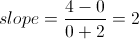 . This is the same slope, so the lines are parallel, and this is the correct answer. We'll go through the rest of the answer choices for completeness.
 : This is in the form
  , where
  is the slope. Here the slope is
  , so this is incorrect.
 : Here the slope is
  , so this is again incorrect.
 : The slope is
  , which is the negative reciprocal of 2. This line is perpendicular, not parallel, to the line in question.
The line between the points  and
and  :
: 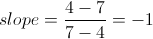 , also incorrect.
Lines are parallel if they have the same slope. First, let's find the slope of the line between
So we are looking for a line with a slope of 2. We'll go through the answer choices.
The line between the points
The line between the points
← Didn't Know|Knew It →
Which of the following lines is parallel with  ?
?
Which of the following lines is parallel with
Tap to reveal answer
Parallel lines have the same slope. Since the slope of is  , we need to pick out the equation of another line that also has a slope of
  . Put each option in
  form can help you easily identify which line has a slope of
  :
:
 becomes
  , which has a slope of
  .
.
 is already in form and has a slope of
  .
.
 is also already in form and has a slope of
  .
.
 becomes
  , which has a slope of
  .
.
 becomes
  and then
  . This line has a slope of
  , so it is the correct answer.
Parallel lines have the same slope. Since the slope of
← Didn't Know|Knew It →
Consider line c to be y= -4x - 7. Which is the reflection of line c across the x-axis?
Consider line c to be y= -4x - 7. Which is the reflection of line c across the x-axis?
Tap to reveal answer
A line reflected across the x-axis will have the negative value of the slope and intercept. This leaves y= 4x + 7.
A line reflected across the x-axis will have the negative value of the slope and intercept. This leaves y= 4x + 7.
← Didn't Know|Knew It →
Line  is represented by the equation
  .
.
If line  passes through the points
  and
and  , and if
  is parallel to
  , then what is the value of
  ?
?
Line
If line
Tap to reveal answer
We are told that lines l and m are parallel. This means that the slope of line m must be the same as the slope of l. Line l is written in the standard form of Ax + By = C, so its slope is equal to –A/B, or –2/–3, which equals 2/3. Therefore, the slope of line m must also be 2/3.
We are told that line m passes through the points (1, 4) and (2, a). The slope between these two points must equal 2/3. We can use the formula for the slope between two points and then set this equal to 2/3.
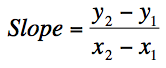
slope = (a – 4)/(2 – 1) = a – 4 = 2/3
a – 4 = 2/3
Multiply both sides by 3:
3(a – 4) = 2
3a – 12 = 2
Add 12 to both sides:
3a = 14
a = 14/3
We are told that lines l and m are parallel. This means that the slope of line m must be the same as the slope of l. Line l is written in the standard form of Ax + By = C, so its slope is equal to –A/B, or –2/–3, which equals 2/3. Therefore, the slope of line m must also be 2/3.
We are told that line m passes through the points (1, 4) and (2, a). The slope between these two points must equal 2/3. We can use the formula for the slope between two points and then set this equal to 2/3.
slope = (a – 4)/(2 – 1) = a – 4 = 2/3
a – 4 = 2/3
Multiply both sides by 3:
3(a – 4) = 2
3a – 12 = 2
Add 12 to both sides:
3a = 14
a = 14/3
← Didn't Know|Knew It →
If line J passes through the points (1, 3) and (2, 4) and line K passes through (0, x) and (10, 3), what would be the value of x in order for lines J and K to be parallel?
If line J passes through the points (1, 3) and (2, 4) and line K passes through (0, x) and (10, 3), what would be the value of x in order for lines J and K to be parallel?
Tap to reveal answer
Find the slope of line J, (4 – 3)/(2 – 1) = 1
Now use this slope in for the equation of line K of the form y = mx + b for the other point (10, 3)
3 = 10 + b → b = –7
So for the point (0, X) → X = 0 – 7,
so x = –7 when these two lines are parallel.
Find the slope of line J, (4 – 3)/(2 – 1) = 1
Now use this slope in for the equation of line K of the form y = mx + b for the other point (10, 3)
3 = 10 + b → b = –7
So for the point (0, X) → X = 0 – 7,
so x = –7 when these two lines are parallel.
← Didn't Know|Knew It →
Which of the following lines is parallel to  ?
?
Which of the following lines is parallel to
Tap to reveal answer
Two lines are parallel if they have the same slope. In the  equation,
  represents the line's slope. The correct answer must therefore have a slope of 2. That line is
 .
.
Two lines are parallel if they have the same slope. In the
← Didn't Know|Knew It →
In the xy-plane, what is the equation for a line that is parallel to  and passes through the point
  ?
?
In the xy-plane, what is the equation for a line that is parallel to
Tap to reveal answer
In order to solve the equation for this line, you need to things: the slope, and at least one point. You are already given a point for the line, so you just need to figure out the slope. The other piece of information you have is a line parallel to the line that you're looking for; since parallel lines have the same slope, you just need to figure out the slope of the parallel line you've already been given.
To figure out the slope, change the equation into point-slope form (y = m_x+_b) so the slope m is easy to find. To do that, you need to isolate y on one side of the equation.



By the calculations above, you'll find that the slope of the parallel line is -1/2.
Now, use this slope of -1/2 and the point 4,1 to find the equation. First, plug them both into the point-slope form, then solve for the slope-intercept form.



In order to solve the equation for this line, you need to things: the slope, and at least one point. You are already given a point for the line, so you just need to figure out the slope. The other piece of information you have is a line parallel to the line that you're looking for; since parallel lines have the same slope, you just need to figure out the slope of the parallel line you've already been given.
To figure out the slope, change the equation into point-slope form (y = m_x+_b) so the slope m is easy to find. To do that, you need to isolate y on one side of the equation.
By the calculations above, you'll find that the slope of the parallel line is -1/2.
Now, use this slope of -1/2 and the point 4,1 to find the equation. First, plug them both into the point-slope form, then solve for the slope-intercept form.
← Didn't Know|Knew It →
One line has four collinear points in order from left to right A, B, C, D. If AB = 10’, CD was twice as long as AB, and AC = 25’, how long is AD?
One line has four collinear points in order from left to right A, B, C, D. If AB = 10’, CD was twice as long as AB, and AC = 25’, how long is AD?
Tap to reveal answer
AB = 10 ’
BC = AC – AB = 25’ – 10’ = 15’
CD = 2 * AB = 2 * 10’ = 20 ’
AD = AB + BC + CD = 10’ + 15’ + 20’ = 45’
AB = 10 ’
BC = AC – AB = 25’ – 10’ = 15’
CD = 2 * AB = 2 * 10’ = 20 ’
AD = AB + BC + CD = 10’ + 15’ + 20’ = 45’
← Didn't Know|Knew It →
What is the distance between (1, 4) and (5, 1)?
What is the distance between (1, 4) and (5, 1)?
Tap to reveal answer
Let P1 = (1, 4) and P2 = (5, 1)
Substitute these values into the distance formula:

The distance formula is an application of the Pythagorean Theorem: a2 + b2 = c2
Let P1 = (1, 4) and P2 = (5, 1)
Substitute these values into the distance formula:
The distance formula is an application of the Pythagorean Theorem: a2 + b2 = c2
← Didn't Know|Knew It →
What is the distance of the line drawn between points (–1,–2) and (–9,4)?
What is the distance of the line drawn between points (–1,–2) and (–9,4)?
Tap to reveal answer
The answer is 10. Use the distance formula between 2 points, or draw a right triangle with legs length 6 and 8 and use the Pythagorean Theorem.
The answer is 10. Use the distance formula between 2 points, or draw a right triangle with legs length 6 and 8 and use the Pythagorean Theorem.
← Didn't Know|Knew It →
What is the distance between the points  and
and  ?
?
What is the distance between the points
Tap to reveal answer
Plug the points into the distance formula and simplify:
distance2 = (_x_2 – _x_1)2 + (_y_2 – _y_1)2 = (7 – 3)2 + (2 – 12)2 = 42 + 102 = 116
distance = √116 = √(4 * 29) = 2√29
Plug the points into the distance formula and simplify:
distance2 = (_x_2 – _x_1)2 + (_y_2 – _y_1)2 = (7 – 3)2 + (2 – 12)2 = 42 + 102 = 116
distance = √116 = √(4 * 29) = 2√29
← Didn't Know|Knew It →
What is the distance between two points  and
and  ?
?
What is the distance between two points
Tap to reveal answer
To find the distance between two points such as these, plot them on a graph.
Then, find the distance between the  units of the points, which is 12, and the distance between the
  points, which is 5. The
  represents the horizontal leg of a right triangle and the
  represents the vertial leg of a right triangle. In this case, we have a 5,12,13 right triangle, but the Pythagorean Theorem can be used as well.
To find the distance between two points such as these, plot them on a graph.
Then, find the distance between the
← Didn't Know|Knew It →
Steven draws a line that is 13 units long. If  is one endpoint of the line, which of the following might be the other endpoint?
Steven draws a line that is 13 units long. If
Tap to reveal answer
The distance formula is  .
.
Plug in  with each of the answer choices and solve.
Plug in  :
:

This is therefore the correct answer choice.
The distance formula is
Plug in
Plug in
This is therefore the correct answer choice.
← Didn't Know|Knew It →
What is the distance between  ?
?
What is the distance between
Tap to reveal answer
Let  and
and  and use the distance formula:

Let
← Didn't Know|Knew It →
What is the distance between the point  and the origin?
What is the distance between the point
Tap to reveal answer
The distance between 2 points is found using the distance or Pythagorean Theorem. Because values are squared in the formula, distance can never be a negative value.
The distance between 2 points is found using the distance or Pythagorean Theorem. Because values are squared in the formula, distance can never be a negative value.
← Didn't Know|Knew It →