
Trigonometric Graphs (all six)
Pre-Calculus · Learn by Concept
Help Questions
Pre-Calculus › Trigonometric Graphs (all six)
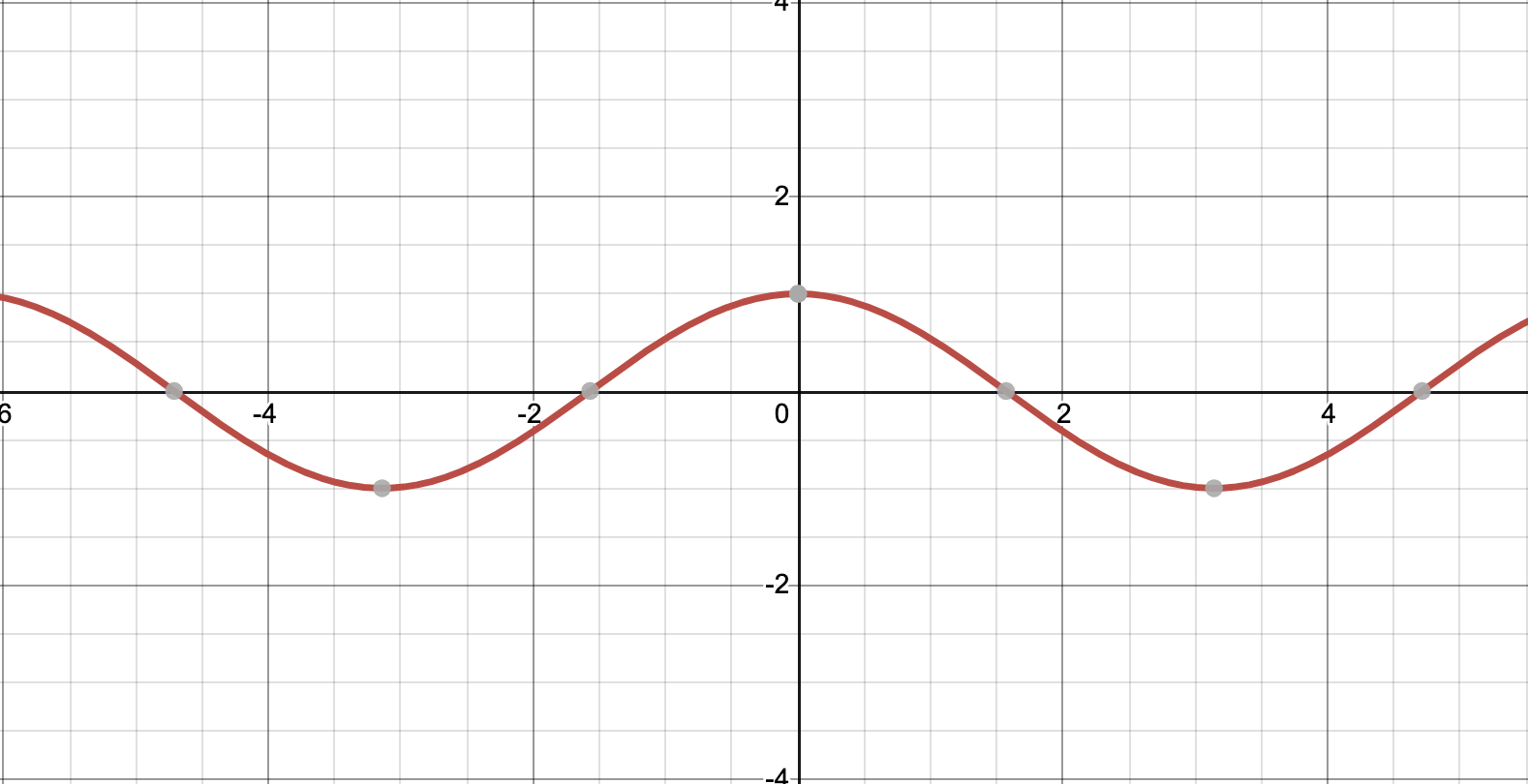
Which of the following functions is represented by this graph?
y = sin(x)
y = cos(x)
y = tan(x)
y = sec(x)
y = csc(x)
Explanation
This graph is the graph of y = cos x. The domain of this function is all real numbers. The range of this function is 

Where does the tangent function intercept the x-axis?
x= all real numbers


No solution
Explanation
Because the tangent function is periodic, it intercepts the x-axis in infinitely many places. We can see several of these in the graph below:
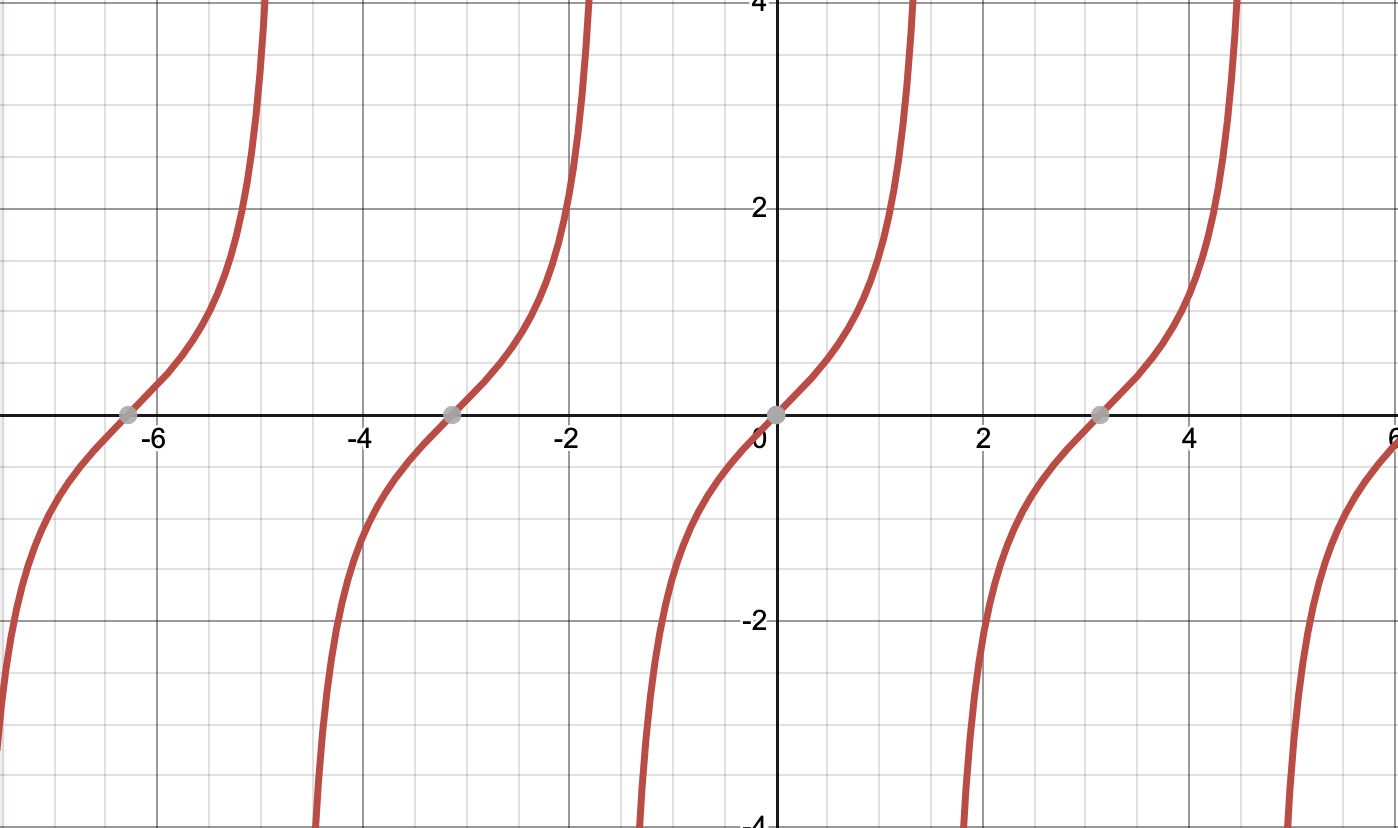
In the photo, we can see that the function is intercepting the x-axis at 

Which of the following functions has a y-intercept of 


Explanation
The y-intercept of a function is found by substituting 





Thus, the function with a y-intercept of 

Which of the following functions is represented by this graph?
y = cot x
y = csc x
y = sec x
y = tan x
Explanation
This graph is the graph of y = tan x. The domain of this function is all real numbers except 


Which of the following functions is represented by this graph?

y = cot x
y = csc x
y = sec x
y = tan x
Explanation
This graph is the graph of y = sec x. The domain of this function is all real numbers except 


Which of the following functions is represented by this graph?

y = cot x
y = csc x
y = sec x
y = tan x
Explanation
This graph is the graph of y = cot x. The domain of this function is all real numbers except 

True or false: If you translate a secant function 
True
False
Explanation
This is false. While the graphs of secant and cosecant functions are related, in order to turn a secant function into a cosecant function, you'd need to translate the original graph 
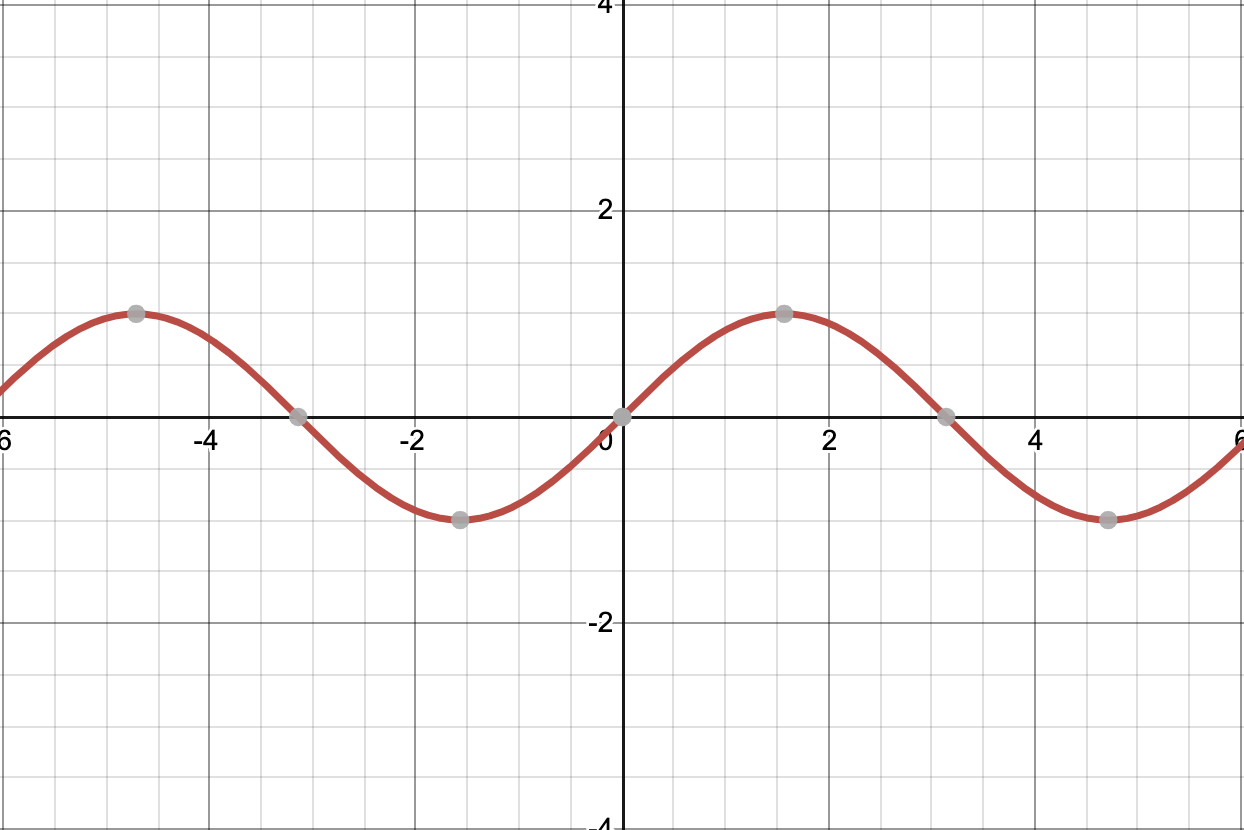
Which of the following functions is represented by this graph?
y = sin x
y = cos x
y = tan x
y = sec x
y = csc x
Explanation
This graph is the graph of y = sin x. The domain of this function is all real numbers. The range of this function is 

True or false: If you translate a sine curve 90o to the left along the x-axis, you will have a cosine curve.
True
False
Explanation
This is true! Notice the similarity of the shape between the graphs, but that they intercept the x-axis at different spots, and their peaks and valleys are at different spots.
y=sin(x), passes through the point (0,0)
y=cos(x), passes through the point (0,1)
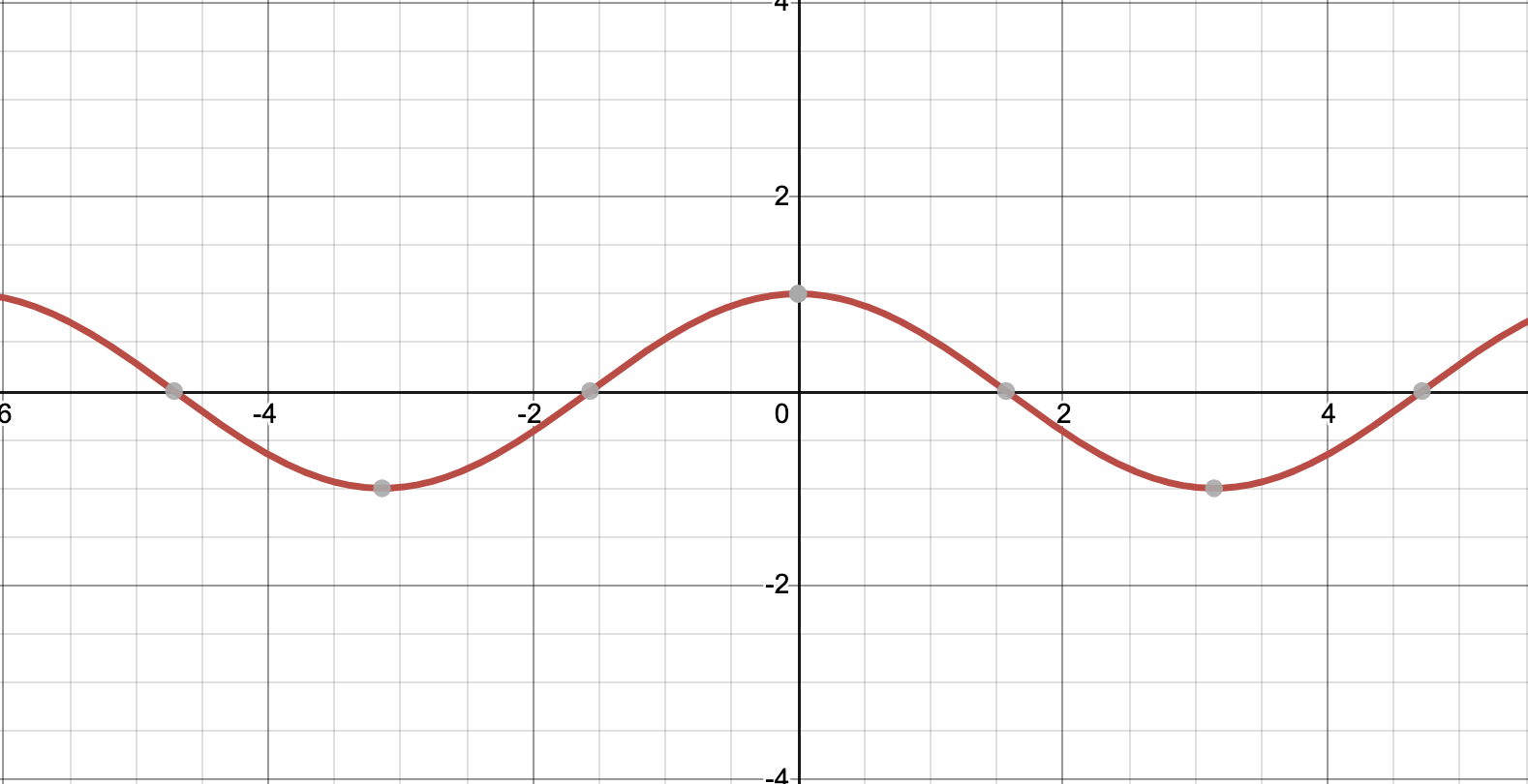
Which of the trigonometric functions is represented by this graph?

y = cot x
y = csc x
y = sec x
y = tan x
Explanation
This graph is the graph of y = csc x. The domain of this function is all real numbers except 
