
Non-Cubic Prisms - Math
Card 1 of 60
The length of a box is 3 times the width. Which of the following gives the length (L inches) in terms of the width (W inches) of the box?
The length of a box is 3 times the width. Which of the following gives the length (L inches) in terms of the width (W inches) of the box?
Tap to reveal answer
When reading word problems, there are certain clues that help interpret what is going on. The word “is” generally means “=” and the word “times” means it will be multiplied by something. Therefore, “the length of a box is 3 times the width” gives you the answer: L = 3 x W, or L = 3W.
When reading word problems, there are certain clues that help interpret what is going on. The word “is” generally means “=” and the word “times” means it will be multiplied by something. Therefore, “the length of a box is 3 times the width” gives you the answer: L = 3 x W, or L = 3W.
← Didn't Know|Knew It →
The width of a box, in inches, is 5 inches less than three times its length. Which of the following equations gives the width, W inches, in terms of the length, L inches, of the box?
The width of a box, in inches, is 5 inches less than three times its length. Which of the following equations gives the width, W inches, in terms of the length, L inches, of the box?
Tap to reveal answer
We notice the width is “5 inches less than three times its width,” so we express W as being three times its width (3L) and 5 inches less than that is 3L minus 5. In this case, W is the dependent and L is the independent variable.
W = 3L - 5
We notice the width is “5 inches less than three times its width,” so we express W as being three times its width (3L) and 5 inches less than that is 3L minus 5. In this case, W is the dependent and L is the independent variable.
W = 3L - 5
← Didn't Know|Knew It →
The length of a box is 3 times the width. Which of the following gives the length (L inches) in terms of the width (W inches) of the box?
The length of a box is 3 times the width. Which of the following gives the length (L inches) in terms of the width (W inches) of the box?
Tap to reveal answer
When reading word problems, there are certain clues that help interpret what is going on. The word “is” generally means “=” and the word “times” means it will be multiplied by something. Therefore, “the length of a box is 3 times the width” gives you the answer: L = 3 x W, or L = 3W.
When reading word problems, there are certain clues that help interpret what is going on. The word “is” generally means “=” and the word “times” means it will be multiplied by something. Therefore, “the length of a box is 3 times the width” gives you the answer: L = 3 x W, or L = 3W.
← Didn't Know|Knew It →
The width of a box, in inches, is 5 inches less than three times its length. Which of the following equations gives the width, W inches, in terms of the length, L inches, of the box?
The width of a box, in inches, is 5 inches less than three times its length. Which of the following equations gives the width, W inches, in terms of the length, L inches, of the box?
Tap to reveal answer
We notice the width is “5 inches less than three times its width,” so we express W as being three times its width (3L) and 5 inches less than that is 3L minus 5. In this case, W is the dependent and L is the independent variable.
W = 3L - 5
We notice the width is “5 inches less than three times its width,” so we express W as being three times its width (3L) and 5 inches less than that is 3L minus 5. In this case, W is the dependent and L is the independent variable.
W = 3L - 5
← Didn't Know|Knew It →
What is the volume?
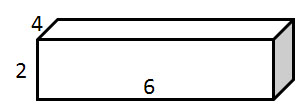
What is the volume?
Tap to reveal answer
The volume is calculated using the equation:


The volume is calculated using the equation:
← Didn't Know|Knew It →
A rectangular box has two sides with the following lengths:
 and
and 
If it possesses a volume of  , what is the area of its largest side?
A rectangular box has two sides with the following lengths:


If it possesses a volume of 
Tap to reveal answer
The volume of a rectangular prism is found using the following formula:

If we substitute our known values, then we can solve for the missing side.


Divide both sides of the equation by 12.


We now know that the missing length equals 7 centimeters.
This means that the box can have sides with the following dimensions: 3cm by 4cm; 7cm by 3cm; or 7cm by 4cm. The greatest area of one side belongs to the one that is 7cm by 4cm.


The volume of a rectangular prism is found using the following formula:

If we substitute our known values, then we can solve for the missing side.


Divide both sides of the equation by 12.


We now know that the missing length equals 7 centimeters.
This means that the box can have sides with the following dimensions: 3cm by 4cm; 7cm by 3cm; or 7cm by 4cm. The greatest area of one side belongs to the one that is 7cm by 4cm.


← Didn't Know|Knew It →
Find the volume of the following triangular prism.
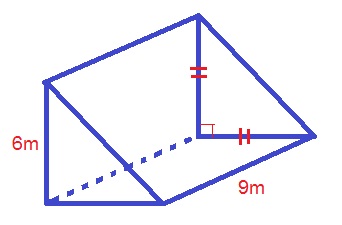
Find the volume of the following triangular prism.
Tap to reveal answer
The formula for the volume of a triangular prism is:
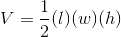
Where  is the length of the triangle,
  is the width of the triangle, and
  is the height of the prism
Plugging in our values, we get:
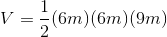

The formula for the volume of a triangular prism is:
Where
Plugging in our values, we get:
← Didn't Know|Knew It →
Find the volume of the following triangular prism.
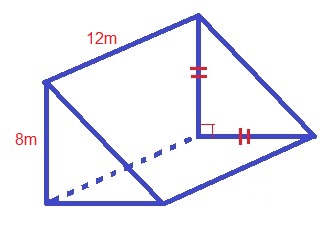
Find the volume of the following triangular prism.
Tap to reveal answer
The formula for the volume of a triangular prism is:

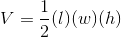
Where  is the length of the base,
  is the width of the base, and
  is the height of the prism
Plugging in our values, we get:
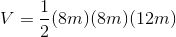

The formula for the volume of a triangular prism is:
Where
Plugging in our values, we get:
← Didn't Know|Knew It →
Find the volume of the following triangular prism:
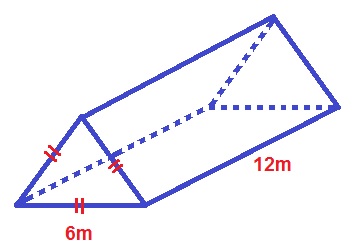
Find the volume of the following triangular prism:
Tap to reveal answer
The formula for the volume of an equilateral, triangular prism is:

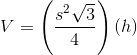
Where  is the length of the triangle side and
  is the length of the height.
Plugging in our values, we get:
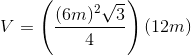

The formula for the volume of an equilateral, triangular prism is:
Where
Plugging in our values, we get:
← Didn't Know|Knew It →
A rectangular box has two sides with the following lengths:
and
If it possesses a volume of , what is the area of its largest side?
A rectangular box has two sides with the following lengths:
If it possesses a volume of
Tap to reveal answer
The volume of a rectangular prism is found using the following formula:
If we substitute our known values, then we can solve for the missing side.
Divide both sides of the equation by 12.
We now know that the missing length equals 7 centimeters.
This means that the box can have sides with the following dimensions: 3cm by 4cm; 7cm by 3cm; or 7cm by 4cm. The greatest area of one side belongs to the one that is 7cm by 4cm.
The volume of a rectangular prism is found using the following formula:
If we substitute our known values, then we can solve for the missing side.
Divide both sides of the equation by 12.
We now know that the missing length equals 7 centimeters.
This means that the box can have sides with the following dimensions: 3cm by 4cm; 7cm by 3cm; or 7cm by 4cm. The greatest area of one side belongs to the one that is 7cm by 4cm.
← Didn't Know|Knew It →
Find the volume of the following triangular prism.
Find the volume of the following triangular prism.
Tap to reveal answer
The formula for the volume of a triangular prism is:
Where is the length of the triangle, is the width of the triangle, and is the height of the prism
Plugging in our values, we get:
The formula for the volume of a triangular prism is:
Where
Plugging in our values, we get:
← Didn't Know|Knew It →
Find the volume of the following triangular prism.
Find the volume of the following triangular prism.
Tap to reveal answer
The formula for the volume of a triangular prism is:
Where is the length of the base, is the width of the base, and is the height of the prism
Plugging in our values, we get:
The formula for the volume of a triangular prism is:
Where
Plugging in our values, we get:
← Didn't Know|Knew It →
Find the volume of the following triangular prism:
Find the volume of the following triangular prism:
Tap to reveal answer
The formula for the volume of an equilateral, triangular prism is:
Where is the length of the triangle side and is the length of the height.
Plugging in our values, we get:
The formula for the volume of an equilateral, triangular prism is:
Where
Plugging in our values, we get:
← Didn't Know|Knew It →
What is the volume?
What is the volume?
Tap to reveal answer
The volume is calculated using the equation:
The volume is calculated using the equation:
← Didn't Know|Knew It →
The length of a box is 3 times the width. Which of the following gives the length (L inches) in terms of the width (W inches) of the box?
The length of a box is 3 times the width. Which of the following gives the length (L inches) in terms of the width (W inches) of the box?
Tap to reveal answer
When reading word problems, there are certain clues that help interpret what is going on. The word “is” generally means “=” and the word “times” means it will be multiplied by something. Therefore, “the length of a box is 3 times the width” gives you the answer: L = 3 x W, or L = 3W.
When reading word problems, there are certain clues that help interpret what is going on. The word “is” generally means “=” and the word “times” means it will be multiplied by something. Therefore, “the length of a box is 3 times the width” gives you the answer: L = 3 x W, or L = 3W.
← Didn't Know|Knew It →
The width of a box, in inches, is 5 inches less than three times its length. Which of the following equations gives the width, W inches, in terms of the length, L inches, of the box?
The width of a box, in inches, is 5 inches less than three times its length. Which of the following equations gives the width, W inches, in terms of the length, L inches, of the box?
Tap to reveal answer
We notice the width is “5 inches less than three times its width,” so we express W as being three times its width (3L) and 5 inches less than that is 3L minus 5. In this case, W is the dependent and L is the independent variable.
W = 3L - 5
We notice the width is “5 inches less than three times its width,” so we express W as being three times its width (3L) and 5 inches less than that is 3L minus 5. In this case, W is the dependent and L is the independent variable.
W = 3L - 5
← Didn't Know|Knew It →
A rectangular box has two sides with the following lengths:
and
If it possesses a volume of , what is the area of its largest side?
A rectangular box has two sides with the following lengths:
If it possesses a volume of
Tap to reveal answer
The volume of a rectangular prism is found using the following formula:
If we substitute our known values, then we can solve for the missing side.
Divide both sides of the equation by 12.
We now know that the missing length equals 7 centimeters.
This means that the box can have sides with the following dimensions: 3cm by 4cm; 7cm by 3cm; or 7cm by 4cm. The greatest area of one side belongs to the one that is 7cm by 4cm.
The volume of a rectangular prism is found using the following formula:
If we substitute our known values, then we can solve for the missing side.
Divide both sides of the equation by 12.
We now know that the missing length equals 7 centimeters.
This means that the box can have sides with the following dimensions: 3cm by 4cm; 7cm by 3cm; or 7cm by 4cm. The greatest area of one side belongs to the one that is 7cm by 4cm.
← Didn't Know|Knew It →
Find the volume of the following triangular prism.
Find the volume of the following triangular prism.
Tap to reveal answer
The formula for the volume of a triangular prism is:
Where is the length of the triangle, is the width of the triangle, and is the height of the prism
Plugging in our values, we get:
The formula for the volume of a triangular prism is:
Where
Plugging in our values, we get:
← Didn't Know|Knew It →
Find the volume of the following triangular prism.
Find the volume of the following triangular prism.
Tap to reveal answer
The formula for the volume of a triangular prism is:
Where is the length of the base, is the width of the base, and is the height of the prism
Plugging in our values, we get:
The formula for the volume of a triangular prism is:
Where
Plugging in our values, we get:
← Didn't Know|Knew It →
Find the volume of the following triangular prism:
Find the volume of the following triangular prism:
Tap to reveal answer
The formula for the volume of an equilateral, triangular prism is:
Where is the length of the triangle side and is the length of the height.
Plugging in our values, we get:
The formula for the volume of an equilateral, triangular prism is:
Where
Plugging in our values, we get:
← Didn't Know|Knew It →