
Radius - GRE Quantitative Reasoning
Card 1 of 160
What is the area of a circle, one-quarter of the circumference of which is 5.5 inches?
What is the area of a circle, one-quarter of the circumference of which is 5.5 inches?
Tap to reveal answer
Here, you need to “solve backward” from the data you have been given. We know that 0.25C = 5.5; therefore, C = 22. In order to solve for the area, we will need the radius of the circle. This can be obtained by recalling that C = 2πr. Replacing 22 for C, we get 22 = 2πr.
Solve for r: r = 22 / 2π = 11 / π.
Now, we solve for the area: A = πr2. Replacing 11 / π for r: A = π (11 / π)2 = (121π) / (π2) = 121 / π.
Here, you need to “solve backward” from the data you have been given. We know that 0.25C = 5.5; therefore, C = 22. In order to solve for the area, we will need the radius of the circle. This can be obtained by recalling that C = 2πr. Replacing 22 for C, we get 22 = 2πr.
Solve for r: r = 22 / 2π = 11 / π.
Now, we solve for the area: A = πr2. Replacing 11 / π for r: A = π (11 / π)2 = (121π) / (π2) = 121 / π.
← Didn't Know|Knew It →
Quantitative Comparison
Quantity A: Area of a right triangle with sides 7, 24, 25
Quantity B: Area of a circle with radius 5
Quantitative Comparison
Quantity A: Area of a right triangle with sides 7, 24, 25
Quantity B: Area of a circle with radius 5
Tap to reveal answer
Quantity A: area = base * height / 2 = 7 * 24/2 = 84
Quantity B: area = πr_2 = 25_π
Now we have to remember what π is. Using π = 3, the area is approximately 75. Using π = 3.14, the area increases a little bit, but no matter how exact an approximation for π, this area will never be larger than Quantity A.
Quantity A: area = base * height / 2 = 7 * 24/2 = 84
Quantity B: area = πr_2 = 25_π
Now we have to remember what π is. Using π = 3, the area is approximately 75. Using π = 3.14, the area increases a little bit, but no matter how exact an approximation for π, this area will never be larger than Quantity A.
← Didn't Know|Knew It →
Given circle O with a diameter of 2 and square ABCD inscribed within circle O, what is the area of the shaded region?
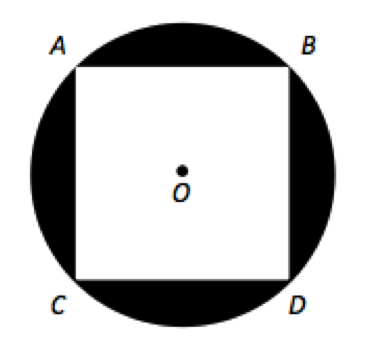
Given circle O with a diameter of 2 and square ABCD inscribed within circle O, what is the area of the shaded region?
Tap to reveal answer
There are two steps to this problem: determining the area of the circle and determining the area of the square. The area of the circle is πr2 which is π(2/1)2 or π. AD is a diameter of circle O and creates two isosceles right triangles with ACD and ABD. The relationship between sides of an isosceles right triangle is 1 : 1 : √2. Thus the sides of square ABCD are √2 and the area is 2. The area of the shaded region is the area of the circle minus the area of the square, or π – 2.
There are two steps to this problem: determining the area of the circle and determining the area of the square. The area of the circle is πr2 which is π(2/1)2 or π. AD is a diameter of circle O and creates two isosceles right triangles with ACD and ABD. The relationship between sides of an isosceles right triangle is 1 : 1 : √2. Thus the sides of square ABCD are √2 and the area is 2. The area of the shaded region is the area of the circle minus the area of the square, or π – 2.
← Didn't Know|Knew It →
For  , Chelsea can get either a
  diameter pizza or two
  diameter pizzas. Which is the better deal?
For
Tap to reveal answer



Therefore the 16 inch pizza is the better deal.
Therefore the 16 inch pizza is the better deal.
← Didn't Know|Knew It →
Circle B has a circumference of 36π. What is the area of circle A, which has a radius half the length of the radius of circle B?
Circle B has a circumference of 36π. What is the area of circle A, which has a radius half the length of the radius of circle B?
Tap to reveal answer
To find the radius of circle B, use the circumference formula (c = πd = 2πr):
2πr = 36π
Divide each side by 2π: r = 18
Now, if circle A has a radius half the length of that of B, A's radius is 18 / 2 = 9.
The area of a circle is πr2. Therefore, for A, it is π*92 = 81π.
To find the radius of circle B, use the circumference formula (c = πd = 2πr):
2πr = 36π
Divide each side by 2π: r = 18
Now, if circle A has a radius half the length of that of B, A's radius is 18 / 2 = 9.
The area of a circle is πr2. Therefore, for A, it is π*92 = 81π.
← Didn't Know|Knew It →
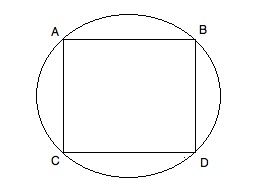
In the diagram above, square ABCD is inscribed in the circle. If the area of the square is 9, what is the area of the circle?
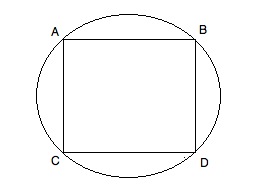
In the diagram above, square ABCD is inscribed in the circle. If the area of the square is 9, what is the area of the circle?
Tap to reveal answer
If the area of the square is 9, then s2 = 9 and s = 3. If the sides thus equal 3, we can calculate the diagonals (either CB or AD) by using the 45-45-90 triangle ratio. For a side of 3, the diagonal will be 3√(2). Note that since the square is inscribed in the circle, this diagonal is also the diameter of the circle. If it is such, the radius is one half of that or 1.5√(2).
Based on that value, we can computer the circle’s area:
A = πr2 = π(1.5√(2))2 = (2.25 * 2)π = 4.5π
If the area of the square is 9, then s2 = 9 and s = 3. If the sides thus equal 3, we can calculate the diagonals (either CB or AD) by using the 45-45-90 triangle ratio. For a side of 3, the diagonal will be 3√(2). Note that since the square is inscribed in the circle, this diagonal is also the diameter of the circle. If it is such, the radius is one half of that or 1.5√(2).
Based on that value, we can computer the circle’s area:
A = πr2 = π(1.5√(2))2 = (2.25 * 2)π = 4.5π
← Didn't Know|Knew It →
A small circle with radius 5 lies inside a larger circle with radius x. What is the area of the region inside the larger circle, but outside of the smaller circle, in terms of x?
A small circle with radius 5 lies inside a larger circle with radius x. What is the area of the region inside the larger circle, but outside of the smaller circle, in terms of x?
Tap to reveal answer
Since the answers are in terms of pi, simply find the area of each circle in terms of x and ∏:
Smaller: ∏(5)2 = 25∏
Larger: ∏x2
We must subtract the inner circle from the outer circle; this translates to ∏x2-25∏.
Since the answers are in terms of pi, simply find the area of each circle in terms of x and ∏:
Smaller: ∏(5)2 = 25∏
Larger: ∏x2
We must subtract the inner circle from the outer circle; this translates to ∏x2-25∏.
← Didn't Know|Knew It →
Quantitative Comparison
Quantity A: Area of a circle with radius r
Quantity B: Perimeter of a circle with radius r
Quantitative Comparison
Quantity A: Area of a circle with radius r
Quantity B: Perimeter of a circle with radius r
Tap to reveal answer
Try different values for the radius to see if a pattern emerges. The formulas needed are Area = π r_2 and Perimeter = 2_πr.
If r = 1, then the Area = π and the Perimeter = 2_π_, so the perimeter is larger.
If r = 4, then the area = 16_π_ and the perimeter = 8_π_, so the area is larger.
Therefore the relationship cannot be determined from the information given.
Try different values for the radius to see if a pattern emerges. The formulas needed are Area = π r_2 and Perimeter = 2_πr.
If r = 1, then the Area = π and the Perimeter = 2_π_, so the perimeter is larger.
If r = 4, then the area = 16_π_ and the perimeter = 8_π_, so the area is larger.
Therefore the relationship cannot be determined from the information given.
← Didn't Know|Knew It →
Quantitative Comparison
A circle has a radius of 2.
Quantity A: The area of the circle
Quantity B: The circumference of the circle
Quantitative Comparison
A circle has a radius of 2.
Quantity A: The area of the circle
Quantity B: The circumference of the circle
Tap to reveal answer
This is one of the only special cases where the area equals the circumference of the circle. The Area = πr_2 = 4_π. The circumference = 2_πr_ = 4_π_.
Note: For a quantitative comparison such as this one where the columns have numeric values instead of variables, the answer will rarely be "cannot be determined".
This is one of the only special cases where the area equals the circumference of the circle. The Area = πr_2 = 4_π. The circumference = 2_πr_ = 4_π_.
Note: For a quantitative comparison such as this one where the columns have numeric values instead of variables, the answer will rarely be "cannot be determined".
← Didn't Know|Knew It →
If a circular garden with a radius of 3 ft. is bordered by a circular sidewalk that is 2 ft. wide, what is the area of the sidewalk?
If a circular garden with a radius of 3 ft. is bordered by a circular sidewalk that is 2 ft. wide, what is the area of the sidewalk?
Tap to reveal answer
To solve this problem, you must find the area of the entire circle (garden and sidewalk) and subtract it by the area of the inner garden. The entire area has a radius of 5 ft. (3 ft. radius of the garden plus the 2 ft. wide sidewalk), giving it an area of  . The inner garden has a radius of 3 ft. and an area of
  . The difference is
  , which is the area of the sidewalk.
To solve this problem, you must find the area of the entire circle (garden and sidewalk) and subtract it by the area of the inner garden. The entire area has a radius of 5 ft. (3 ft. radius of the garden plus the 2 ft. wide sidewalk), giving it an area of
← Didn't Know|Knew It →
If a circular monument with a radius of 30 feet is surrounded by a circular garden that is 20 feet wide, what is the area of the garden?
If a circular monument with a radius of 30 feet is surrounded by a circular garden that is 20 feet wide, what is the area of the garden?
Tap to reveal answer
To find the area of the garden, you need to find the entire area and subtract that by the area of the inner circle, or the monument. The radius of the larger circle is 50, which makes its area  . The radius of the inner circle is 30, which makes its area
  . The difference is
  .
.
To find the area of the garden, you need to find the entire area and subtract that by the area of the inner circle, or the monument. The radius of the larger circle is 50, which makes its area
← Didn't Know|Knew It →
What is the circumference of a circle with an area of 36π?
What is the circumference of a circle with an area of 36π?
Tap to reveal answer
We know that the area of a circle can be expressed: a = πr2
If we know that the area is 36π, we can substitute this into said equation and get: 36π = πr2
Solving for r, we get: 36 = r2; (after taking the square root of both sides:) 6 = r
Now, we know that the circuference of a circle is expressed: c = πd. Since we know that d = 2r (two radii, placed one after the other, make a diameter), we can rewrite the circumference equation to be: c = 2πr
Since we have r, we can rewrite this to be: c = 2π*6 = 12π
We know that the area of a circle can be expressed: a = πr2
If we know that the area is 36π, we can substitute this into said equation and get: 36π = πr2
Solving for r, we get: 36 = r2; (after taking the square root of both sides:) 6 = r
Now, we know that the circuference of a circle is expressed: c = πd. Since we know that d = 2r (two radii, placed one after the other, make a diameter), we can rewrite the circumference equation to be: c = 2πr
Since we have r, we can rewrite this to be: c = 2π*6 = 12π
← Didn't Know|Knew It →
Circle A has an area of  . What is the perimeter of an enclosed semi-circle with half the radius of circle A?
Circle A has an area of
Tap to reveal answer
Based on our information, we know that the 121π = πr2; 121 = r2; r = 11.
Our other circle with half the radius of A has a diameter equal to the radius of A. Therefore, the circumference of this circle is 11π. Half of this is 5.5π. However, since this is a semi circle, it is enclosed and looks like this:
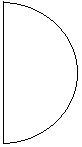
Therefore, we have to include the diameter in the perimeter. Therefore, the total perimeter of the semi-circle is 5.5π + 11.
Based on our information, we know that the 121π = πr2; 121 = r2; r = 11.
Our other circle with half the radius of A has a diameter equal to the radius of A. Therefore, the circumference of this circle is 11π. Half of this is 5.5π. However, since this is a semi circle, it is enclosed and looks like this:
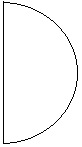
Therefore, we have to include the diameter in the perimeter. Therefore, the total perimeter of the semi-circle is 5.5π + 11.
← Didn't Know|Knew It →
Which is greater: the circumference of a circle with an area of  , or the perimeter of a square with side length
  inches?
Which is greater: the circumference of a circle with an area of
Tap to reveal answer
Starting with the circle, we need to find the radius in order to get the circumference. Find  by plugging our given area into the equation for the area of a circle:


Then calculate circumference:

 (approximating
  as 3.14)
To find the perimeter of the square, we can use  , where
  is the perimeter and
  is the side length:

 , so the circle's circumference is greater.
Starting with the circle, we need to find the radius in order to get the circumference. Find
Then calculate circumference:
To find the perimeter of the square, we can use
← Didn't Know|Knew It →

Quantity A: The circumference of a circle with radius 
Quantity B: The area of a circle with a diameter one fourth the radius of the circle in Quantity A
Which of the following is true?
Quantity A: The circumference of a circle with radius
Quantity B: The area of a circle with a diameter one fourth the radius of the circle in Quantity A
Which of the following is true?
Tap to reveal answer
Let's compute each value separately. We know that the radii are positive numbers that are greater than or equal to  . This means that we do not need to worry about the fact that the area could represent a square of a decimal value like
  .
.
Quantity A
Since  , we know:

Quantity B
If the diameter is one-fourth the radius of A, we know:
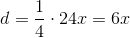
Thus, the radius must be half of that, or  .
.
Now, we need to compute the area of this circle. We know:

Therefore, 
Now, notice that if  , Quantity A is larger.
However, if we choose a value like  , we have:
Quantity A: 
Quantity B: 
Therefore, the relation cannot be determined!
Let's compute each value separately. We know that the radii are positive numbers that are greater than or equal to
Quantity A
Since
Quantity B
If the diameter is one-fourth the radius of A, we know:
Thus, the radius must be half of that, or
Now, we need to compute the area of this circle. We know:
Therefore,
Now, notice that if
However, if we choose a value like
Quantity A:
Quantity B:
Therefore, the relation cannot be determined!
← Didn't Know|Knew It →
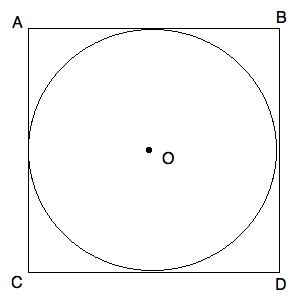
Circle  has a center in the center of Square
  .
.
The area of Square  is
is 
 .
.
What is the circumference of Circle  ?
?
Circle
The area of Square
What is the circumference of Circle
Tap to reveal answer
Since we know that the area of Square  is
is  , we know
  , where
  is the length of one of its sides. From this, we can solve for
  by taking the square root of both sides. You will have to do this by estimating upward. Therefore, you know that
  is
is  . By careful guessing, you can quickly see that
  is
is  . From this, you know that the diameter of your circle must be half of
  , or
, or  (because it is circumscribed). Therefore, you can draw:
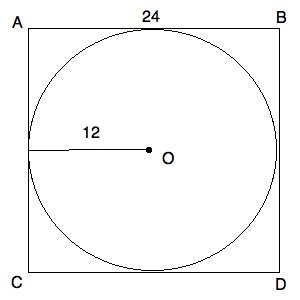
The circumference of this circle is defined as:
 or, for your values:

(You could also compute this from the diameter, but many students just memorize the formula above.)
Since we know that the area of Square
The circumference of this circle is defined as:
(You could also compute this from the diameter, but many students just memorize the formula above.)
← Didn't Know|Knew It →
What is the circumference of a circle with an area of 36π?
What is the circumference of a circle with an area of 36π?
Tap to reveal answer
We know that the area of a circle can be expressed: a = πr2
If we know that the area is 36π, we can substitute this into said equation and get: 36π = πr2
Solving for r, we get: 36 = r2; (after taking the square root of both sides:) 6 = r
Now, we know that the circuference of a circle is expressed: c = πd. Since we know that d = 2r (two radii, placed one after the other, make a diameter), we can rewrite the circumference equation to be: c = 2πr
Since we have r, we can rewrite this to be: c = 2π*6 = 12π
We know that the area of a circle can be expressed: a = πr2
If we know that the area is 36π, we can substitute this into said equation and get: 36π = πr2
Solving for r, we get: 36 = r2; (after taking the square root of both sides:) 6 = r
Now, we know that the circuference of a circle is expressed: c = πd. Since we know that d = 2r (two radii, placed one after the other, make a diameter), we can rewrite the circumference equation to be: c = 2πr
Since we have r, we can rewrite this to be: c = 2π*6 = 12π
← Didn't Know|Knew It →
Circle A has an area of . What is the perimeter of an enclosed semi-circle with half the radius of circle A?
Circle A has an area of
Tap to reveal answer
Based on our information, we know that the 121π = πr2; 121 = r2; r = 11.
Our other circle with half the radius of A has a diameter equal to the radius of A. Therefore, the circumference of this circle is 11π. Half of this is 5.5π. However, since this is a semi circle, it is enclosed and looks like this:
Therefore, we have to include the diameter in the perimeter. Therefore, the total perimeter of the semi-circle is 5.5π + 11.
Based on our information, we know that the 121π = πr2; 121 = r2; r = 11.
Our other circle with half the radius of A has a diameter equal to the radius of A. Therefore, the circumference of this circle is 11π. Half of this is 5.5π. However, since this is a semi circle, it is enclosed and looks like this:
Therefore, we have to include the diameter in the perimeter. Therefore, the total perimeter of the semi-circle is 5.5π + 11.
← Didn't Know|Knew It →
Which is greater: the circumference of a circle with an area of , or the perimeter of a square with side length inches?
Which is greater: the circumference of a circle with an area of
Tap to reveal answer
Starting with the circle, we need to find the radius in order to get the circumference. Find by plugging our given area into the equation for the area of a circle:
Then calculate circumference:
(approximating as 3.14)
To find the perimeter of the square, we can use , where is the perimeter and is the side length:
, so the circle's circumference is greater.
Starting with the circle, we need to find the radius in order to get the circumference. Find
Then calculate circumference:
To find the perimeter of the square, we can use
← Didn't Know|Knew It →
Quantity A: The circumference of a circle with radius
Quantity B: The area of a circle with a diameter one fourth the radius of the circle in Quantity A
Which of the following is true?
Quantity A: The circumference of a circle with radius
Quantity B: The area of a circle with a diameter one fourth the radius of the circle in Quantity A
Which of the following is true?
Tap to reveal answer
Let's compute each value separately. We know that the radii are positive numbers that are greater than or equal to . This means that we do not need to worry about the fact that the area could represent a square of a decimal value like .
Quantity A
Since , we know:
Quantity B
If the diameter is one-fourth the radius of A, we know:
Thus, the radius must be half of that, or .
Now, we need to compute the area of this circle. We know:
Therefore,
Now, notice that if , Quantity A is larger.
However, if we choose a value like , we have:
Quantity A:
Quantity B:
Therefore, the relation cannot be determined!
Let's compute each value separately. We know that the radii are positive numbers that are greater than or equal to
Quantity A
Since
Quantity B
If the diameter is one-fourth the radius of A, we know:
Thus, the radius must be half of that, or
Now, we need to compute the area of this circle. We know:
Therefore,
Now, notice that if
However, if we choose a value like
Quantity A:
Quantity B:
Therefore, the relation cannot be determined!
← Didn't Know|Knew It →