
DSQ: Calculating mode - GMAT Quantitative
Card 1 of 77
What is the mode of a data set with ten data values?
-
The value 15 occurs four times in the data set.
-
The value 16 occurs three times in the data set.
What is the mode of a data set with ten data values?
-
The value 15 occurs four times in the data set.
-
The value 16 occurs three times in the data set.
Tap to reveal answer
If we are given only that 15 occurs four times in the data set, it is possible that another number can occur up to six times; similarly, if we are given only that 16 occurs three times, it is possible that another number can occur up to seven times. Either way, the mode - the most frequently occurring data value - cannot be determined.
However, if we know both facts, then no other data value can occur more than three times, so 15 must be the mode.
Therefore, the answer is that both statements are sufficient, but not one alone.
If we are given only that 15 occurs four times in the data set, it is possible that another number can occur up to six times; similarly, if we are given only that 16 occurs three times, it is possible that another number can occur up to seven times. Either way, the mode - the most frequently occurring data value - cannot be determined.
However, if we know both facts, then no other data value can occur more than three times, so 15 must be the mode.
Therefore, the answer is that both statements are sufficient, but not one alone.
← Didn't Know|Knew It →

What is the value of  in the list above?
(1) 
(2) The mode of the numbers in the list is  .
.
What is the value of
(1)
(2) The mode of the numbers in the list is
Tap to reveal answer

The mode is the value that appears most often in a set of data. In our list the value that appears most often is n. Therefore n is the mode of the numbers in the list.
Only statement (2) is useful in finding the value of n as it states that the mode of the numbers in the list is 16.

The mode is the value that appears most often in a set of data. In our list the value that appears most often is n. Therefore n is the mode of the numbers in the list.
Only statement (2) is useful in finding the value of n as it states that the mode of the numbers in the list is 16.
← Didn't Know|Knew It →

What is the value of  in the list of numbers above?
(1)  .
.
(2) The mode of the numbers in the list is  .
.
What is the value of
(1)
(2) The mode of the numbers in the list is
Tap to reveal answer

The mode is the value that appears most often in a set of numbers. In the list given, the value that appears the most is m. Therefore, m is the mode in the list of numbers given.
(1) 
Therefore,  .
.
Statement (1) is sufficient
(2) The mode of the numbers in the list is 6.
Therefore,  .
.
Statement (2) is sufficient
Each Statement ALONE is SUFFICIENT
The mode is the value that appears most often in a set of numbers. In the list given, the value that appears the most is m. Therefore, m is the mode in the list of numbers given.
(1)
Therefore,
Statement (1) is sufficient
(2) The mode of the numbers in the list is 6.
Therefore,
Statement (2) is sufficient
Each Statement ALONE is SUFFICIENT
← Didn't Know|Knew It →

What is the value of  in the list of numbers above?
(1) The mode of the numbers in the list is  .
.
(2)  .
.

What is the value of
(1) The mode of the numbers in the list is
(2)
Tap to reveal answer

The mode is the value that appears most often in a set of data. In our list the value that appears most often is m+1. Therefore m+1 is the mode of the numbers in the list.
Only statement (1) is useful in finding the value of m as it states that the mode of the numbers in the list is 14.


Statement (1) ALONE is sufficient, but Statement (2) ALONE is not sufficient.

The mode is the value that appears most often in a set of data. In our list the value that appears most often is m+1. Therefore m+1 is the mode of the numbers in the list.
Only statement (1) is useful in finding the value of m as it states that the mode of the numbers in the list is 14.
Statement (1) ALONE is sufficient, but Statement (2) ALONE is not sufficient.
← Didn't Know|Knew It →

What is the sum of  and
and  ?
?
(1) The mode of the numbers in the list is  .
.
(2) The product of  and
and  is
is  .
.
What is the sum of
(1) The mode of the numbers in the list is
(2) The product of
Tap to reveal answer

The mode is the value that appears most often in a set of data. In our list the value that appears most often is 2y. Therefore 2y is the mode of the numbers in the list.
(1) The mode of the numbers in the list is 20.


We still don't know the value of x. Statement (1) ALONE is not sufficient.
(2) The product of x and y is 150.


Statement (2) ALONE is not sufficient.
Using both statements, we can write

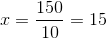
Therefore, 
Both statements TOGETHER are sufficient, but NEITHER statement ALONE is sufficient.
The mode is the value that appears most often in a set of data. In our list the value that appears most often is 2y. Therefore 2y is the mode of the numbers in the list.
(1) The mode of the numbers in the list is 20.
We still don't know the value of x. Statement (1) ALONE is not sufficient.
(2) The product of x and y is 150.
Statement (2) ALONE is not sufficient.
Using both statements, we can write
Therefore,
Both statements TOGETHER are sufficient, but NEITHER statement ALONE is sufficient.
← Didn't Know|Knew It →
Find the mode of the following set of numbers:

Find the mode of the following set of numbers:
Tap to reveal answer
The mode is the number that occurs most frequently. Therefore, our answer is  .
.
The mode is the number that occurs most frequently. Therefore, our answer is
← Didn't Know|Knew It →
What is the mode of a data set with ten data values?
-
The value 15 occurs four times in the data set.
-
The value 16 occurs three times in the data set.
What is the mode of a data set with ten data values?
-
The value 15 occurs four times in the data set.
-
The value 16 occurs three times in the data set.
Tap to reveal answer
If we are given only that 15 occurs four times in the data set, it is possible that another number can occur up to six times; similarly, if we are given only that 16 occurs three times, it is possible that another number can occur up to seven times. Either way, the mode - the most frequently occurring data value - cannot be determined.
However, if we know both facts, then no other data value can occur more than three times, so 15 must be the mode.
Therefore, the answer is that both statements are sufficient, but not one alone.
If we are given only that 15 occurs four times in the data set, it is possible that another number can occur up to six times; similarly, if we are given only that 16 occurs three times, it is possible that another number can occur up to seven times. Either way, the mode - the most frequently occurring data value - cannot be determined.
However, if we know both facts, then no other data value can occur more than three times, so 15 must be the mode.
Therefore, the answer is that both statements are sufficient, but not one alone.
← Didn't Know|Knew It →
What is the value of in the list above?
(1)
(2) The mode of the numbers in the list is .
What is the value of
(1)
(2) The mode of the numbers in the list is
Tap to reveal answer
The mode is the value that appears most often in a set of data. In our list the value that appears most often is n. Therefore n is the mode of the numbers in the list.
Only statement (2) is useful in finding the value of n as it states that the mode of the numbers in the list is 16.
The mode is the value that appears most often in a set of data. In our list the value that appears most often is n. Therefore n is the mode of the numbers in the list.
Only statement (2) is useful in finding the value of n as it states that the mode of the numbers in the list is 16.
← Didn't Know|Knew It →
What is the value of in the list of numbers above?
(1) .
(2) The mode of the numbers in the list is .
What is the value of
(1)
(2) The mode of the numbers in the list is
Tap to reveal answer
The mode is the value that appears most often in a set of numbers. In the list given, the value that appears the most is m. Therefore, m is the mode in the list of numbers given.
(1)
Therefore, .
Statement (1) is sufficient
(2) The mode of the numbers in the list is 6.
Therefore, .
Statement (2) is sufficient
Each Statement ALONE is SUFFICIENT
The mode is the value that appears most often in a set of numbers. In the list given, the value that appears the most is m. Therefore, m is the mode in the list of numbers given.
(1)
Therefore,
Statement (1) is sufficient
(2) The mode of the numbers in the list is 6.
Therefore,
Statement (2) is sufficient
Each Statement ALONE is SUFFICIENT
← Didn't Know|Knew It →
What is the value of in the list of numbers above?
(1) The mode of the numbers in the list is .
(2) .
What is the value of
(1) The mode of the numbers in the list is
(2)
Tap to reveal answer
The mode is the value that appears most often in a set of data. In our list the value that appears most often is m+1. Therefore m+1 is the mode of the numbers in the list.
Only statement (1) is useful in finding the value of m as it states that the mode of the numbers in the list is 14.
Statement (1) ALONE is sufficient, but Statement (2) ALONE is not sufficient.
The mode is the value that appears most often in a set of data. In our list the value that appears most often is m+1. Therefore m+1 is the mode of the numbers in the list.
Only statement (1) is useful in finding the value of m as it states that the mode of the numbers in the list is 14.
Statement (1) ALONE is sufficient, but Statement (2) ALONE is not sufficient.
← Didn't Know|Knew It →
What is the sum of and ?
(1) The mode of the numbers in the list is .
(2) The product of and is .
What is the sum of
(1) The mode of the numbers in the list is
(2) The product of
Tap to reveal answer
The mode is the value that appears most often in a set of data. In our list the value that appears most often is 2y. Therefore 2y is the mode of the numbers in the list.
(1) The mode of the numbers in the list is 20.
We still don't know the value of x. Statement (1) ALONE is not sufficient.
(2) The product of x and y is 150.
Statement (2) ALONE is not sufficient.
Using both statements, we can write
Therefore,
Both statements TOGETHER are sufficient, but NEITHER statement ALONE is sufficient.
The mode is the value that appears most often in a set of data. In our list the value that appears most often is 2y. Therefore 2y is the mode of the numbers in the list.
(1) The mode of the numbers in the list is 20.
We still don't know the value of x. Statement (1) ALONE is not sufficient.
(2) The product of x and y is 150.
Statement (2) ALONE is not sufficient.
Using both statements, we can write
Therefore,
Both statements TOGETHER are sufficient, but NEITHER statement ALONE is sufficient.
← Didn't Know|Knew It →
Find the mode of the following set of numbers:
Find the mode of the following set of numbers:
Tap to reveal answer
The mode is the number that occurs most frequently. Therefore, our answer is .
The mode is the number that occurs most frequently. Therefore, our answer is
← Didn't Know|Knew It →
What is the mode of a data set with ten data values?
-
The value 15 occurs four times in the data set.
-
The value 16 occurs three times in the data set.
What is the mode of a data set with ten data values?
-
The value 15 occurs four times in the data set.
-
The value 16 occurs three times in the data set.
Tap to reveal answer
If we are given only that 15 occurs four times in the data set, it is possible that another number can occur up to six times; similarly, if we are given only that 16 occurs three times, it is possible that another number can occur up to seven times. Either way, the mode - the most frequently occurring data value - cannot be determined.
However, if we know both facts, then no other data value can occur more than three times, so 15 must be the mode.
Therefore, the answer is that both statements are sufficient, but not one alone.
If we are given only that 15 occurs four times in the data set, it is possible that another number can occur up to six times; similarly, if we are given only that 16 occurs three times, it is possible that another number can occur up to seven times. Either way, the mode - the most frequently occurring data value - cannot be determined.
However, if we know both facts, then no other data value can occur more than three times, so 15 must be the mode.
Therefore, the answer is that both statements are sufficient, but not one alone.
← Didn't Know|Knew It →
What is the value of in the list above?
(1)
(2) The mode of the numbers in the list is .
What is the value of
(1)
(2) The mode of the numbers in the list is
Tap to reveal answer
The mode is the value that appears most often in a set of data. In our list the value that appears most often is n. Therefore n is the mode of the numbers in the list.
Only statement (2) is useful in finding the value of n as it states that the mode of the numbers in the list is 16.
The mode is the value that appears most often in a set of data. In our list the value that appears most often is n. Therefore n is the mode of the numbers in the list.
Only statement (2) is useful in finding the value of n as it states that the mode of the numbers in the list is 16.
← Didn't Know|Knew It →
What is the value of in the list of numbers above?
(1) .
(2) The mode of the numbers in the list is .
What is the value of
(1)
(2) The mode of the numbers in the list is
Tap to reveal answer
The mode is the value that appears most often in a set of numbers. In the list given, the value that appears the most is m. Therefore, m is the mode in the list of numbers given.
(1)
Therefore, .
Statement (1) is sufficient
(2) The mode of the numbers in the list is 6.
Therefore, .
Statement (2) is sufficient
Each Statement ALONE is SUFFICIENT
The mode is the value that appears most often in a set of numbers. In the list given, the value that appears the most is m. Therefore, m is the mode in the list of numbers given.
(1)
Therefore,
Statement (1) is sufficient
(2) The mode of the numbers in the list is 6.
Therefore,
Statement (2) is sufficient
Each Statement ALONE is SUFFICIENT
← Didn't Know|Knew It →
What is the value of in the list of numbers above?
(1) The mode of the numbers in the list is .
(2) .
What is the value of
(1) The mode of the numbers in the list is
(2)
Tap to reveal answer
The mode is the value that appears most often in a set of data. In our list the value that appears most often is m+1. Therefore m+1 is the mode of the numbers in the list.
Only statement (1) is useful in finding the value of m as it states that the mode of the numbers in the list is 14.
Statement (1) ALONE is sufficient, but Statement (2) ALONE is not sufficient.
The mode is the value that appears most often in a set of data. In our list the value that appears most often is m+1. Therefore m+1 is the mode of the numbers in the list.
Only statement (1) is useful in finding the value of m as it states that the mode of the numbers in the list is 14.
Statement (1) ALONE is sufficient, but Statement (2) ALONE is not sufficient.
← Didn't Know|Knew It →
What is the sum of and ?
(1) The mode of the numbers in the list is .
(2) The product of and is .
What is the sum of
(1) The mode of the numbers in the list is
(2) The product of
Tap to reveal answer
The mode is the value that appears most often in a set of data. In our list the value that appears most often is 2y. Therefore 2y is the mode of the numbers in the list.
(1) The mode of the numbers in the list is 20.
We still don't know the value of x. Statement (1) ALONE is not sufficient.
(2) The product of x and y is 150.
Statement (2) ALONE is not sufficient.
Using both statements, we can write
Therefore,
Both statements TOGETHER are sufficient, but NEITHER statement ALONE is sufficient.
The mode is the value that appears most often in a set of data. In our list the value that appears most often is 2y. Therefore 2y is the mode of the numbers in the list.
(1) The mode of the numbers in the list is 20.
We still don't know the value of x. Statement (1) ALONE is not sufficient.
(2) The product of x and y is 150.
Statement (2) ALONE is not sufficient.
Using both statements, we can write
Therefore,
Both statements TOGETHER are sufficient, but NEITHER statement ALONE is sufficient.
← Didn't Know|Knew It →
Find the mode of the following set of numbers:
Find the mode of the following set of numbers:
Tap to reveal answer
The mode is the number that occurs most frequently. Therefore, our answer is .
The mode is the number that occurs most frequently. Therefore, our answer is
← Didn't Know|Knew It →
The set

is bimodal. What is  equal to?
-

-

The set
is bimodal. What is
Tap to reveal answer
If we know that  , then the set is known to have one 24, five 26's, three 27's, two 28's, and one 29. The only way the set can have two modes is for
  and
and  ; this makes 27 occur five times, just as frequently as 26.
If we know  , however, the set is known to have one 24, four 26's, four 27's, two 28's, and one 29. There are two ways for the set to have two modes (26 and 27): for
  and
and  , or for
  and
and  .
.
The answer is that Statement 1 alone is sufficient to answer the question, but not Statement 2.
If we know that
If we know
The answer is that Statement 1 alone is sufficient to answer the question, but not Statement 2.
← Didn't Know|Knew It →
Consider this data set: 
Which of the following statements correctly compares the median and the mode?
Consider this data set:
Which of the following statements correctly compares the median and the mode?
Tap to reveal answer
The median of a data set with an even number of elements is the arithmetic mean of the two elements that fall in the middle when the elements are arranged in ascending order. These two elements are both 6, so 6 is the median.
The mode of a data set is the element that occurs most frequently. Since 6 appears thre times, 7 appears two times, and all other elements appear once each, the mode is 6.
Therefore, the median and the mode are equal.
The median of a data set with an even number of elements is the arithmetic mean of the two elements that fall in the middle when the elements are arranged in ascending order. These two elements are both 6, so 6 is the median.
The mode of a data set is the element that occurs most frequently. Since 6 appears thre times, 7 appears two times, and all other elements appear once each, the mode is 6.
Therefore, the median and the mode are equal.
← Didn't Know|Knew It →