
Interpret diagrams of eclipses
Earth Science · Learn by Concept
Help Questions
Earth Science › Interpret diagrams of eclipses

Which of the following describes what someone from Earth would witness while looking at the moon given the relative positions of the space objects in the image?
a quarter moon
a full moon
a lunar eclipse
a solar eclipse
Explanation
The answer is "a quarter moon" because half of the moon is illuminated from the perspective of Earth.
The passage of the moon into Earth's shadow causes ________.
a lunar eclipse
a solar eclipse
a new moon
a full moon
Explanation
The answer is "a lunar eclipse."
The term eclipse is used to describe either a solar eclipse when the Moon's shadow crosses the Earth's surface, or a lunar eclipse, when the Moon moves into the Earth's shadow.
There are four types of solar eclipses: total, partial, annual and hybrid. Total solar eclipses happen when the sun is completely blocked by the moon. Total solar eclipses are only visible from a specific part of the Earth. Total lunar eclipses are when the Moon passes through Earth’s umbral shadow -giving it that red-orange tone. The red-orange glow is caused by the umbral shadow. This is the inner darkest part of the shadow. The reason it has that reddish color it’s because the Sun’s light is passing around the whole circumference of Earth. Partial lunar eclipse is when the Moon passes through only a portion of the Earth’s shadow. Depending on how far in the Moon moves into the shadow, the Moon may or may not get the orange glow.

In the diagram above, the moon is slowly moving in front of the sun. What does this diagram represent?
a solar eclipse
a lunar eclipse
phases of the sun
phases of the moon
Explanation
The answer is "a solar eclipse."
The term eclipse is used to describe either a solar eclipse when the Moon's shadow crosses the Earth's surface, or a lunar eclipse, when the Moon moves into the Earth's shadow. There are four types of solar eclipses: total, partial, annual and hybrid. Total solar eclipses happen when the sun is completely blocked by the moon. Total solar eclipses are only visible from a specific part of the Earth. Total lunar eclipses are when the Moon passes through Earth’s umbral shadow -giving it that red-orange tone. The red-orange glow is caused by the umbral shadow. This is the inner darkest part of the shadow. The reason it has that reddish color it’s because the Sun’s light is passing around the whole circumference of Earth. Partial lunar eclipse is when the Moon passes through only a portion of the Earth’s shadow. Depending on how far in the Moon moves into the shadow, the Moon may or may not get the orange glow.
Which of the following diagrams shows the correct positions of these solar bodies to create a lunar eclipse from Earth?
none of these


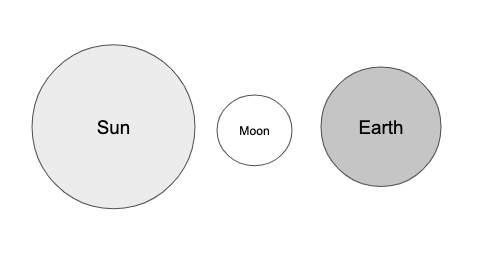
all of these
Explanation
The term eclipse is used to describe either a solar eclipse when the Moon's shadow crosses the Earth's surface, or a lunar eclipse, when the Moon moves into the Earth's shadow.
There are four types of solar eclipses: total, partial, annual and hybrid. Total solar eclipses happen when the sun is completely blocked by the moon. Total solar eclipses are only visible from a specific part of the Earth. Total lunar eclipses are when the Moon passes through Earth’s umbral shadow -giving it that red-orange tone. The red-orange glow is caused by the umbral shadow. This is the inner darkest part of the shadow. The reason it has that reddish color it’s because the Sun’s light is passing around the whole circumference of Earth. Partial lunar eclipse is when the Moon passes through only a portion of the Earth’s shadow. Depending on how far in the Moon moves into the shadow, the Moon may or may not get the orange glow.

If you were on the Earth in this diagram, what type of eclipse would you be experiencing?
a total solar eclipse
a partial solar eclipse
not enough information
a lunar eclipse
Explanation
The answer is "not enough information" because it depends on your location on Earth.
The term eclipse is used to describe either a solar eclipse when the Moon's shadow crosses the Earth's surface, or a lunar eclipse, when the Moon moves into the Earth's shadow.
There are four types of solar eclipses: total, partial, annual and hybrid. Total solar eclipses happen when the sun is completely blocked by the moon. Total solar eclipses are only visible from a specific part of the Earth. Total lunar eclipses are when the Moon passes through Earth’s umbral shadow -giving it that red-orange tone. The red-orange glow is caused by the umbral shadow. This is the inner darkest part of the shadow. The reason it has that reddish color it’s because the Sun’s light is passing around the whole circumference of Earth. Partial lunar eclipse is when the Moon passes through only a portion of the Earth’s shadow. Depending on how far in the Moon moves into the shadow, the Moon may or may not get the orange glow.
Which of the following diagrams best represents the positions of these celestial bodies in a solar eclipse?
all of these
none of these

Explanation
The term eclipse is used to describe either a solar eclipse when the Moon's shadow crosses the Earth's surface, or a lunar eclipse, when the Moon moves into the Earth's shadow.
There are four types of solar eclipses: total, partial, annual and hybrid. Total solar eclipses happen when the sun is completely blocked by the moon. Total solar eclipses are only visible from a specific part of the Earth. Total lunar eclipses are when the Moon passes through Earth’s umbral shadow -giving it that red-orange tone. The red-orange glow is caused by the umbral shadow. This is the inner darkest part of the shadow. The reason it has that reddish color it’s because the Sun’s light is passing around the whole circumference of Earth. Partial lunar eclipse is when the Moon passes through only a portion of the Earth’s shadow. Depending on how far in the Moon moves into the shadow, the Moon may or may not get the orange glow.
Which of the following diagrams best represents the positions of these celestial bodies in a solar eclipse?
all of these
none of these
Explanation
The term eclipse is used to describe either a solar eclipse when the Moon's shadow crosses the Earth's surface, or a lunar eclipse, when the Moon moves into the Earth's shadow.
There are four types of solar eclipses: total, partial, annual and hybrid. Total solar eclipses happen when the sun is completely blocked by the moon. Total solar eclipses are only visible from a specific part of the Earth. Total lunar eclipses are when the Moon passes through Earth’s umbral shadow -giving it that red-orange tone. The red-orange glow is caused by the umbral shadow. This is the inner darkest part of the shadow. The reason it has that reddish color it’s because the Sun’s light is passing around the whole circumference of Earth. Partial lunar eclipse is when the Moon passes through only a portion of the Earth’s shadow. Depending on how far in the Moon moves into the shadow, the Moon may or may not get the orange glow.

What event is pictured above?
a solar eclipse
a lunar eclipse
a solar flare
a penumbra
Explanation
The term eclipse is used to describe either a solar eclipse when the Moon's shadow crosses the Earth's surface, or a lunar eclipse, when the Moon moves into the Earth's shadow.
There are four types of solar eclipses: total, partial, annual and hybrid. Total solar eclipses happen when the sun is completely blocked by the moon. Total solar eclipses are only visible from a specific part of the Earth. Total lunar eclipses are when the Moon passes through Earth’s umbral shadow -giving it that red-orange tone. The red-orange glow is caused by the umbral shadow. This is the inner darkest part of the shadow. The reason it has that reddish color it’s because the Sun’s light is passing around the whole circumference of Earth. Partial lunar eclipse is when the Moon passes through only a portion of the Earth’s shadow. Depending on how far in the Moon moves into the shadow, the Moon may or may not get the orange glow.

What type of eclipse is pictured?
a total lunar eclipse
a partial lunar eclipse
a total solar eclipse
a partial solar eclipse
Explanation
The answer is "partial lunar eclipse" because the moon is not visible in the shadow of the Earth. It is partial because it is in the penumbra and not the umbra.
The term eclipse is used to describe either a solar eclipse when the Moon's shadow crosses the Earth's surface, or a lunar eclipse, when the Moon moves into the Earth's shadow.
There are four types of solar eclipses: total, partial, annual and hybrid. Total solar eclipses happen when the sun is completely blocked by the moon. Total solar eclipses are only visible from a specific part of the Earth. Total lunar eclipses are when the Moon passes through Earth’s umbral shadow -giving it that red-orange tone. The red-orange glow is caused by the umbral shadow. This is the inner darkest part of the shadow. The reason it has that reddish color it’s because the Sun’s light is passing around the whole circumference of Earth. Partial lunar eclipse is when the Moon passes through only a portion of the Earth’s shadow. Depending on how far in the Moon moves into the shadow, the Moon may or may not get the orange glow.

Where are solar eclipses visible?
in the shadow of the moon
in the penumbra
in the umbra
all of these
Explanation
The answer is "all of these."
The term eclipse is used to describe either a solar eclipse when the Moon's shadow crosses the Earth's surface, or a lunar eclipse, when the Moon moves into the Earth's shadow.
There are four types of solar eclipses: total, partial, annual and hybrid. Total solar eclipses happen when the sun is completely blocked by the moon. Total solar eclipses are only visible from a specific part of the Earth. Total lunar eclipses are when the Moon passes through Earth’s umbral shadow -giving it that red-orange tone. The red-orange glow is caused by the umbral shadow. This is the inner darkest part of the shadow. The reason it has that reddish color it’s because the Sun’s light is passing around the whole circumference of Earth. Partial lunar eclipse is when the Moon passes through only a portion of the Earth’s shadow. Depending on how far in the Moon moves into the shadow, the Moon may or may not get the orange glow.