
Structure of Ionic Solids
AP Chemistry · Learn by Concept
Help Questions
AP Chemistry › Structure of Ionic Solids
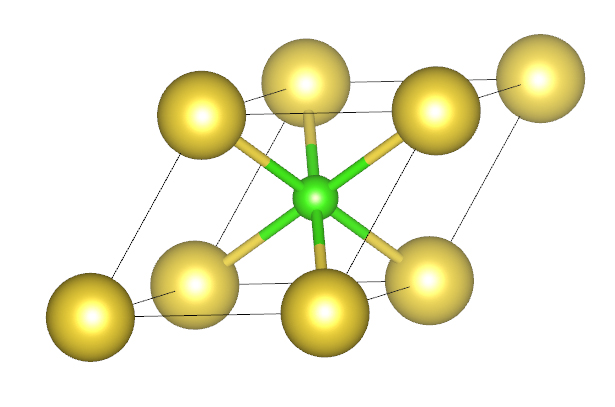
How many yellow spheres and green spheres are there per unit cell shown?
8 yellow, 1 green
4 yellow, 1 green
2 yellow, 1 green
1 yellow, 1 green
None of the above
Explanation
For a unit cell, the corners count as 1/8 of a sphere and atoms completely within the unit cell count as 1. This gives us 1 yellow and 1 green sphere in the unit cell shown above.
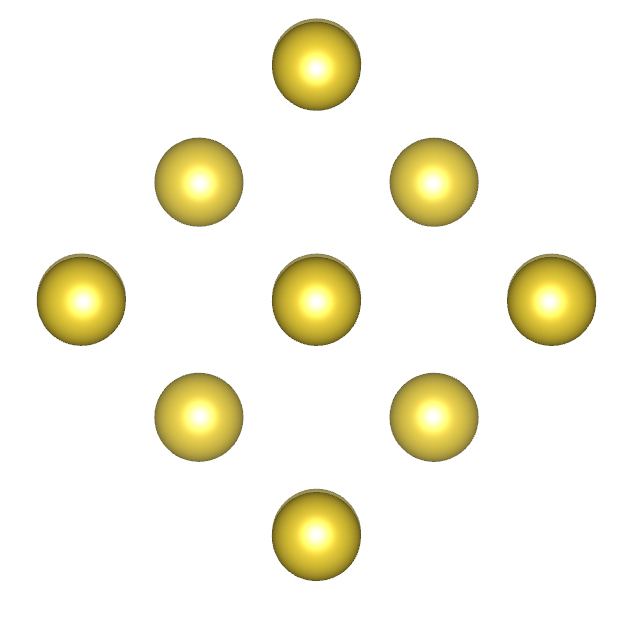
Based upon the above image, what type of packing is this?
Hexagonal close packing (hcp)
Cubic close packing (ccp)
Body centered packing (bcp)
Simple cubic packing (scp)
Tetragonal close packing (tcp)
Explanation
The figure above represents ABABA packing which is hexagonal close packing.
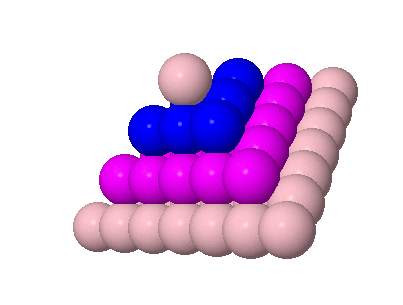
Based upon the above image, what type of packing is this?
Hexagonal close packing (hcp)
Cubic close packing (ccp)
Body centered packing (bcp)
Simple cubic packing (scp)
Tetragonal close packing (tcp)
Explanation
The figure above represents ABCABC packing which is cubic close packing.
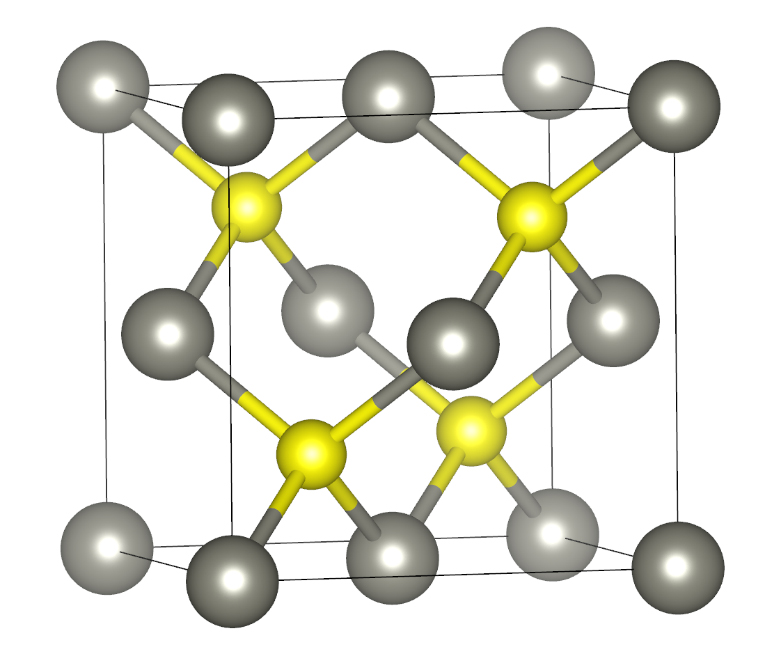
Zinc Sulfide can be described as a cubic close packed arrangement of Zn with sulfur occupying one-half of the tetrahedral holes. Based upon that description and the figure above, what is the formula for zinc sulfide?
Zn2S
ZnS2
Zn12S4
Zn3S
ZnS
Explanation
The figure above has 8 Zn atoms on the corners (counting as 1/8) and 6 Zn atoms on the faces (counting as ½). This gives 4 Zn atoms in the unit cell. The Sulfur atoms are completely within the unit cell and count as 1 each for a total of 4 S atoms. This gives the formula Zn4S4 which reduces down to ZnS.
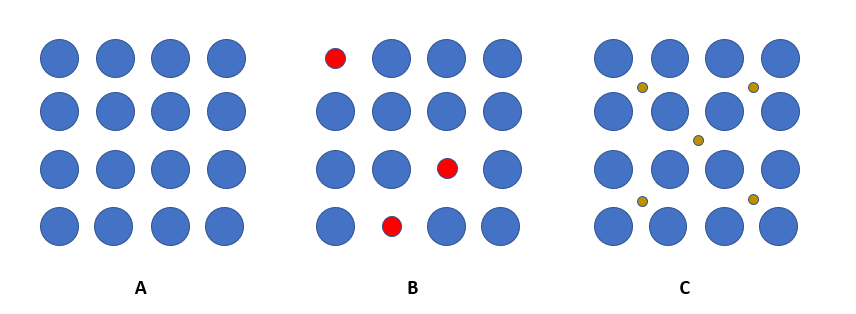
What are the names of the alloy types shown in the figure above:
A = Interstitial; B = Pure metal; C = Substitutional
A = Pure Meta; B = Substitutional; C = Interstitial
A = Substitutional; B = Interstitial; C = Pure Metal
A = Pure Metal; B = Interstitial; C = Substitutional
None of the above
Explanation
An interstitial alloy has a smaller atom inserted into the unit cell, a substitutional alloy has another atom substitute for the main element, and a pure metal is only composed of a single atom type.