
Precipitates and Calculations - AP Chemistry
Card 1 of 104
A chemist has 5.2L of a 0.3M  solution. If the solvent were boiled off, what would be the mass of the remaining solid?
A chemist has 5.2L of a 0.3M
Tap to reveal answer
First we will figure out the number of moles of  that we have. We have 5.2 L of a 0.3 M solution, so:

Now the problem is to find the mass of 1.56 moles of  . First, we need to know the molecular weight of
  . We will go to the periodic table and add up the mass of each element present.

Now the problem is simple as we have the molar mass and the number of desired moles.

First we will figure out the number of moles of
Now the problem is to find the mass of 1.56 moles of
Now the problem is simple as we have the molar mass and the number of desired moles.
← Didn't Know|Knew It →
A chemist combines 300 mL of a 0.3 M  solution with 200 mL of 0.4 M
  solution. How many grams of precipitate form?
A chemist combines 300 mL of a 0.3 M
Tap to reveal answer
First, let us write out an ion exchance reaction for the reactants:

By solubility rules,  is soluble in water and
  is not. Our new reaction is:

Now we will calculate the theoretical yield of each reactant.

Now we perform the same calculation beginning with  :
:

The limiting reagent is  and this reaction produces 18.7 g precipitate.
First, let us write out an ion exchance reaction for the reactants:
By solubility rules,
Now we will calculate the theoretical yield of each reactant.
Now we perform the same calculation beginning with
The limiting reagent is
← Didn't Know|Knew It →
A chemist boils off the water from 234 mL of a 0.4 M solution of KCl. What is the mass of the remaining solid?
A chemist boils off the water from 234 mL of a 0.4 M solution of KCl. What is the mass of the remaining solid?
Tap to reveal answer

← Didn't Know|Knew It →
A chemist boils off 344 mL of a 0.35 M solution of sodium hydroxide. How much solid remains?
A chemist boils off 344 mL of a 0.35 M solution of sodium hydroxide. How much solid remains?
Tap to reveal answer
First, you must recognize that the chemical formula for sodium hydroxide is  . The mass of the boiled solution is

First, you must recognize that the chemical formula for sodium hydroxide is
← Didn't Know|Knew It →
What is the mass of the solid left over after boiling off 100mL of 0.4M NaCl solution?
What is the mass of the solid left over after boiling off 100mL of 0.4M NaCl solution?
Tap to reveal answer
The remaining mass with be equal to the mass of the sodium chloride in the solution. Once the solvent (water) evaporates, the solute will remain.
Atomic mass of sodium is ~23. Atomic mass of chlorine is ~35.5. Molecular mass of NaCl is ~58.5.


The remaining mass with be equal to the mass of the sodium chloride in the solution. Once the solvent (water) evaporates, the solute will remain.
Atomic mass of sodium is ~23. Atomic mass of chlorine is ~35.5. Molecular mass of NaCl is ~58.5.
← Didn't Know|Knew It →
The  of
of  (at 298K) is
  . What is the molar solubility of the hydroxide ion (
 ) in a saturated solution of
  ?
?
The
Tap to reveal answer
The dissociation of calcium hydroxide in aqueous solution is:

The  of calcium hydroxide is related to the dissolved concentrations of its counterions:

 and
and  are produced in a molar ratio of 1:2; for each molecule of calcium hydroxide that dissolves:

Given a  value of
  , the molar solubilities of each counterion may be determined by setting
  . It follows that:


Now, we can use basic algebra to solve for  :
:



Since we set  , and
, and  , multiplying the value of
  by two gives the correct answer, which is 0.022M.
The dissociation of calcium hydroxide in aqueous solution is:
The
Given a
Now, we can use basic algebra to solve for
Since we set
← Didn't Know|Knew It →
Given a pKa of 6.37 for the first deprotonation of carbonic acid ( ), what is the ratio of bicarbonate (
 ) to carbonic acid (
 ) at pH 5.60?
Assume that the effect of the deprotonation of bicarbonate is negligible in your calculations.
Given a pKa of 6.37 for the first deprotonation of carbonic acid (
Assume that the effect of the deprotonation of bicarbonate is negligible in your calculations.
Tap to reveal answer
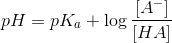
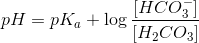
Use the Henderson-Hasselbalch equation to determine the ratio of bicarbonate to carbonic acid in solution:

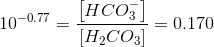
Solve for the ratio we need to answer the question:
Use the Henderson-Hasselbalch equation to determine the ratio of bicarbonate to carbonic acid in solution:
Solve for the ratio we need to answer the question:
← Didn't Know|Knew It →
What type of reaction is also known as a precipitation reaction?
What type of reaction is also known as a precipitation reaction?
Tap to reveal answer
Double replacement reactions can be further categorized as precipitation reactions since it is possible to make a precipitate (solid) from mixing two liquids. Combustion reactions involve using oxygen to burn another species, and the products are carbon dioxide and water. Combination reactions involve the synthesis of one molecule from two separate ones; decomposition is the opposite.
Double replacement reactions can be further categorized as precipitation reactions since it is possible to make a precipitate (solid) from mixing two liquids. Combustion reactions involve using oxygen to burn another species, and the products are carbon dioxide and water. Combination reactions involve the synthesis of one molecule from two separate ones; decomposition is the opposite.
← Didn't Know|Knew It →
A chemist boils off the water from 234 mL of a 0.4 M solution of KCl. What is the mass of the remaining solid?
A chemist boils off the water from 234 mL of a 0.4 M solution of KCl. What is the mass of the remaining solid?
Tap to reveal answer
← Didn't Know|Knew It →
A chemist boils off 344 mL of a 0.35 M solution of sodium hydroxide. How much solid remains?
A chemist boils off 344 mL of a 0.35 M solution of sodium hydroxide. How much solid remains?
Tap to reveal answer
First, you must recognize that the chemical formula for sodium hydroxide is . The mass of the boiled solution is
First, you must recognize that the chemical formula for sodium hydroxide is
← Didn't Know|Knew It →
A chemist has 5.2L of a 0.3M solution. If the solvent were boiled off, what would be the mass of the remaining solid?
A chemist has 5.2L of a 0.3M
Tap to reveal answer
First we will figure out the number of moles of that we have. We have 5.2 L of a 0.3 M solution, so:
Now the problem is to find the mass of 1.56 moles of . First, we need to know the molecular weight of . We will go to the periodic table and add up the mass of each element present.
Now the problem is simple as we have the molar mass and the number of desired moles.
First we will figure out the number of moles of
Now the problem is to find the mass of 1.56 moles of
Now the problem is simple as we have the molar mass and the number of desired moles.
← Didn't Know|Knew It →
A chemist combines 300 mL of a 0.3 M solution with 200 mL of 0.4 M solution. How many grams of precipitate form?
A chemist combines 300 mL of a 0.3 M
Tap to reveal answer
First, let us write out an ion exchance reaction for the reactants:
By solubility rules, is soluble in water and is not. Our new reaction is:
Now we will calculate the theoretical yield of each reactant.
Now we perform the same calculation beginning with :
The limiting reagent is and this reaction produces 18.7 g precipitate.
First, let us write out an ion exchance reaction for the reactants:
By solubility rules,
Now we will calculate the theoretical yield of each reactant.
Now we perform the same calculation beginning with
The limiting reagent is
← Didn't Know|Knew It →
What is the mass of the solid left over after boiling off 100mL of 0.4M NaCl solution?
What is the mass of the solid left over after boiling off 100mL of 0.4M NaCl solution?
Tap to reveal answer
The remaining mass with be equal to the mass of the sodium chloride in the solution. Once the solvent (water) evaporates, the solute will remain.
Atomic mass of sodium is ~23. Atomic mass of chlorine is ~35.5. Molecular mass of NaCl is ~58.5.
The remaining mass with be equal to the mass of the sodium chloride in the solution. Once the solvent (water) evaporates, the solute will remain.
Atomic mass of sodium is ~23. Atomic mass of chlorine is ~35.5. Molecular mass of NaCl is ~58.5.
← Didn't Know|Knew It →
The of (at 298K) is . What is the molar solubility of the hydroxide ion () in a saturated solution of ?
The
Tap to reveal answer
The dissociation of calcium hydroxide in aqueous solution is:
The of calcium hydroxide is related to the dissolved concentrations of its counterions:
and are produced in a molar ratio of 1:2; for each molecule of calcium hydroxide that dissolves:
Given a value of , the molar solubilities of each counterion may be determined by setting . It follows that:
Now, we can use basic algebra to solve for :
Since we set , and , multiplying the value of by two gives the correct answer, which is 0.022M.
The dissociation of calcium hydroxide in aqueous solution is:
The
Given a
Now, we can use basic algebra to solve for
Since we set
← Didn't Know|Knew It →
Given a pKa of 6.37 for the first deprotonation of carbonic acid (), what is the ratio of bicarbonate () to carbonic acid () at pH 5.60?
Assume that the effect of the deprotonation of bicarbonate is negligible in your calculations.
Given a pKa of 6.37 for the first deprotonation of carbonic acid (
Assume that the effect of the deprotonation of bicarbonate is negligible in your calculations.
Tap to reveal answer
Use the Henderson-Hasselbalch equation to determine the ratio of bicarbonate to carbonic acid in solution:
Solve for the ratio we need to answer the question:
Use the Henderson-Hasselbalch equation to determine the ratio of bicarbonate to carbonic acid in solution:
Solve for the ratio we need to answer the question:
← Didn't Know|Knew It →
What type of reaction is also known as a precipitation reaction?
What type of reaction is also known as a precipitation reaction?
Tap to reveal answer
Double replacement reactions can be further categorized as precipitation reactions since it is possible to make a precipitate (solid) from mixing two liquids. Combustion reactions involve using oxygen to burn another species, and the products are carbon dioxide and water. Combination reactions involve the synthesis of one molecule from two separate ones; decomposition is the opposite.
Double replacement reactions can be further categorized as precipitation reactions since it is possible to make a precipitate (solid) from mixing two liquids. Combustion reactions involve using oxygen to burn another species, and the products are carbon dioxide and water. Combination reactions involve the synthesis of one molecule from two separate ones; decomposition is the opposite.
← Didn't Know|Knew It →
A chemist boils off the water from 234 mL of a 0.4 M solution of KCl. What is the mass of the remaining solid?
A chemist boils off the water from 234 mL of a 0.4 M solution of KCl. What is the mass of the remaining solid?
Tap to reveal answer
← Didn't Know|Knew It →
A chemist boils off 344 mL of a 0.35 M solution of sodium hydroxide. How much solid remains?
A chemist boils off 344 mL of a 0.35 M solution of sodium hydroxide. How much solid remains?
Tap to reveal answer
First, you must recognize that the chemical formula for sodium hydroxide is . The mass of the boiled solution is
First, you must recognize that the chemical formula for sodium hydroxide is
← Didn't Know|Knew It →
A chemist has 5.2L of a 0.3M solution. If the solvent were boiled off, what would be the mass of the remaining solid?
A chemist has 5.2L of a 0.3M
Tap to reveal answer
First we will figure out the number of moles of that we have. We have 5.2 L of a 0.3 M solution, so:
Now the problem is to find the mass of 1.56 moles of . First, we need to know the molecular weight of . We will go to the periodic table and add up the mass of each element present.
Now the problem is simple as we have the molar mass and the number of desired moles.
First we will figure out the number of moles of
Now the problem is to find the mass of 1.56 moles of
Now the problem is simple as we have the molar mass and the number of desired moles.
← Didn't Know|Knew It →
A chemist combines 300 mL of a 0.3 M solution with 200 mL of 0.4 M solution. How many grams of precipitate form?
A chemist combines 300 mL of a 0.3 M
Tap to reveal answer
First, let us write out an ion exchance reaction for the reactants:
By solubility rules, is soluble in water and is not. Our new reaction is:
Now we will calculate the theoretical yield of each reactant.
Now we perform the same calculation beginning with :
The limiting reagent is and this reaction produces 18.7 g precipitate.
First, let us write out an ion exchance reaction for the reactants:
By solubility rules,
Now we will calculate the theoretical yield of each reactant.
Now we perform the same calculation beginning with
The limiting reagent is
← Didn't Know|Knew It →