
Ancient Through Medieval Architecture - AP Art History
Card 1 of 472
Which style emerged in France between 1140 and 1270, dominating the artistic mood of Europe for nearly 400 years? The movement is historically associated with the re-urbanization of Europe and, in its late period, an increasing aesthetic of secularity.
Which style emerged in France between 1140 and 1270, dominating the artistic mood of Europe for nearly 400 years? The movement is historically associated with the re-urbanization of Europe and, in its late period, an increasing aesthetic of secularity.
Tap to reveal answer
The Gothic style emerged from France, was the longest lasting European architectural movement, and is associated with the rise of the Great cities in Europe. Romanesque and Byzantine architecture are rooted in other regions and were highly religious for the duration of their dominance. The International Style was a very brief phenomenon, and is distinguished by its unique, elongated rendering of the human figure.
The Gothic style emerged from France, was the longest lasting European architectural movement, and is associated with the rise of the Great cities in Europe. Romanesque and Byzantine architecture are rooted in other regions and were highly religious for the duration of their dominance. The International Style was a very brief phenomenon, and is distinguished by its unique, elongated rendering of the human figure.
← Didn't Know|Knew It →
Which kinds of buildings best articulated the various features of Gothic architecture?
Which kinds of buildings best articulated the various features of Gothic architecture?
Tap to reveal answer
Gothic architecture dominated between the fall of Rome in the fifth century CE and the rise of the Renaissance in the fifteenth century. Gothic architecture was notable for large, ornate stone structures with many elements and imposing figures. All of these are best seen in the many Gothic cathedrals that allowed architects and designers their most control over the shape of buildings.
Gothic architecture dominated between the fall of Rome in the fifth century CE and the rise of the Renaissance in the fifteenth century. Gothic architecture was notable for large, ornate stone structures with many elements and imposing figures. All of these are best seen in the many Gothic cathedrals that allowed architects and designers their most control over the shape of buildings.
← Didn't Know|Knew It →

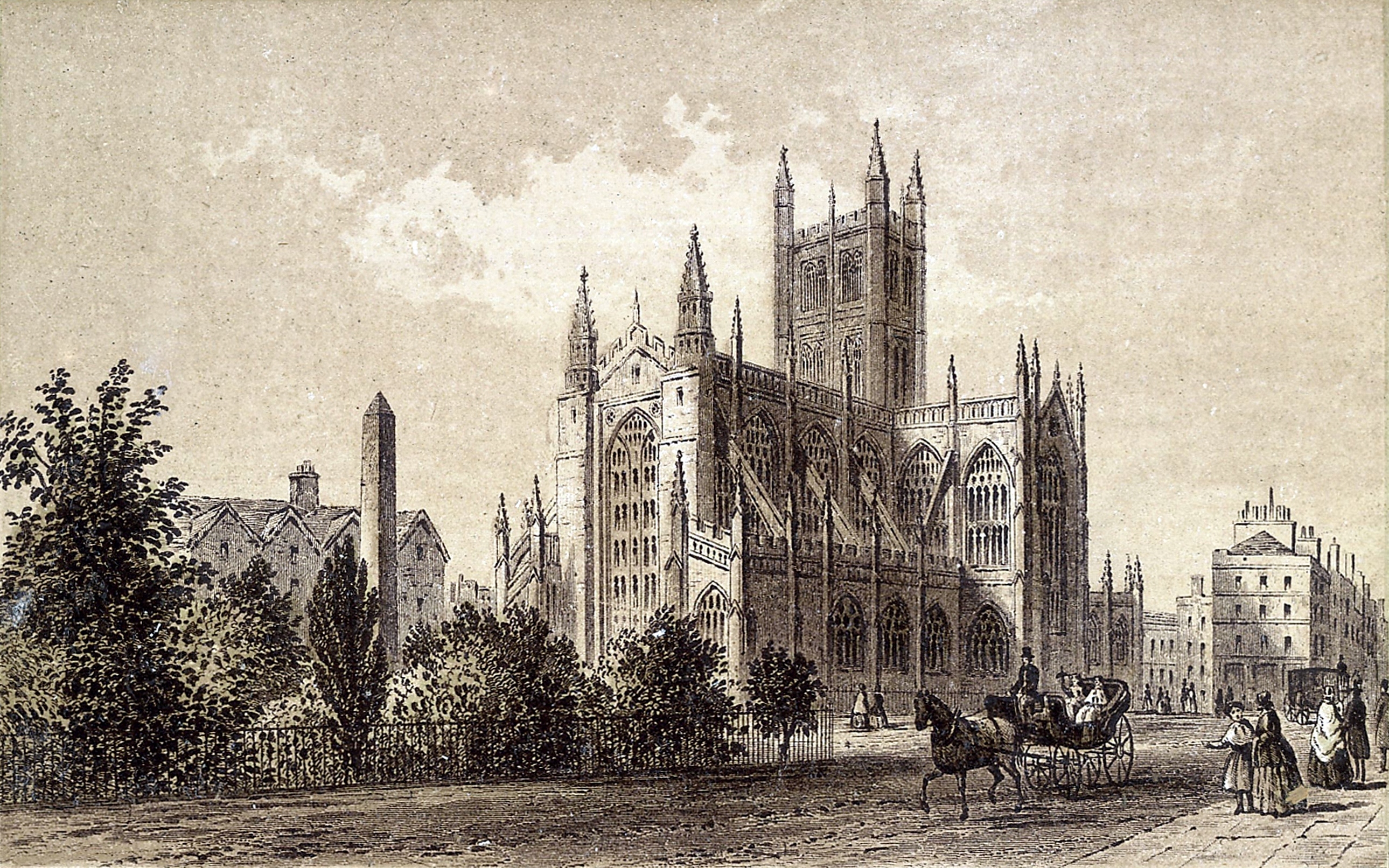 , a key feature of Gothic churces, symbolized an effort to reach heaven.
, a key feature of Gothic churces, symbolized an effort to reach heaven.
Tap to reveal answer
A key feautre of Gothic churches is their extreme height. This verticality was partly for show, but more importantly symbolized an attempt to reach heaven. For many centuries, Gothic cathedrals were the tallest buildings in Europe.
A key feautre of Gothic churches is their extreme height. This verticality was partly for show, but more importantly symbolized an attempt to reach heaven. For many centuries, Gothic cathedrals were the tallest buildings in Europe.
← Didn't Know|Knew It →


The previous images are all public domain and can be found at https://en.wikipedia.org/wiki/Florence\_Cathedral.
The long rectangular plan of the cathedral is due to .
The previous images are all public domain and can be found at https://en.wikipedia.org/wiki/Florence\_Cathedral.
The long rectangular plan of the cathedral is due to .
Tap to reveal answer
The centermost sweeping area of the church is the nave. Its length is what contributes to the rectangular nature of the plan. The aisles are what give the church its cross shape, and the transepts are the outcroppings on the sides. The apex is the half-circle at the top of the nave across from the doors, and is where the church official would stand.
The centermost sweeping area of the church is the nave. Its length is what contributes to the rectangular nature of the plan. The aisles are what give the church its cross shape, and the transepts are the outcroppings on the sides. The apex is the half-circle at the top of the nave across from the doors, and is where the church official would stand.
← Didn't Know|Knew It →
The previous images are all public domain and can be found at https://en.wikipedia.org/wiki/Florence\_Cathedral.
The Cathedral's size indicates the importance of .
The previous images are all public domain and can be found at https://en.wikipedia.org/wiki/Florence\_Cathedral.
The Cathedral's size indicates the importance of .
Tap to reveal answer
The gothic cathedral in general was a display of grand architecture and ornate visual elements, and the church was dominant over the state at that time. But the best answer is the Catholic church's tradition and value in Gothic society. The churches were not meant to impose dominance over secular law, at least not directly; what they were meant to do is reach towards the heavens, encompass the Catholic's desire to be close to God and to build a holy space as grand as one could.
The gothic cathedral in general was a display of grand architecture and ornate visual elements, and the church was dominant over the state at that time. But the best answer is the Catholic church's tradition and value in Gothic society. The churches were not meant to impose dominance over secular law, at least not directly; what they were meant to do is reach towards the heavens, encompass the Catholic's desire to be close to God and to build a holy space as grand as one could.
← Didn't Know|Knew It →
The previous images are all public domain and can be found at https://en.wikipedia.org/wiki/Florence\_Cathedral.
There are likely three doors because .
The previous images are all public domain and can be found at https://en.wikipedia.org/wiki/Florence\_Cathedral.
There are likely three doors because .
Tap to reveal answer
Three is perhaps the most powerful number in the Catholic world, representing the holy trinity. Gothic cathedrals often featured three doors- a center door as well as two flanking doors. It was believed that one walked in the door a sinner (these were the flanking doors) and walked back out through the grand center doors absolved of their sins in the eyes of God.
Three is perhaps the most powerful number in the Catholic world, representing the holy trinity. Gothic cathedrals often featured three doors- a center door as well as two flanking doors. It was believed that one walked in the door a sinner (these were the flanking doors) and walked back out through the grand center doors absolved of their sins in the eyes of God.
← Didn't Know|Knew It →
The previous images are all public domain and can be found at https://en.wikipedia.org/wiki/Florence\_Cathedral.
What Gothic element is NOT featured prominently in the Cathedral (likely replaced by a Renaissance dome)?
The previous images are all public domain and can be found at https://en.wikipedia.org/wiki/Florence\_Cathedral.
What Gothic element is NOT featured prominently in the Cathedral (likely replaced by a Renaissance dome)?
Tap to reveal answer
The cathedral does have a baptistry attached, as was tradition by the time it was completed. There are likely also s-curved figures in the space, as that was the figural building tradition of the time. Bell towers were not featured as much in Gothic architecture, although a spire could have a bell within it. As Gothic cathedrals grew more ornate, square bell towers became spindly and graceful spires, built as high as they could reach. This cathedral, though, does not feature this element.
The cathedral does have a baptistry attached, as was tradition by the time it was completed. There are likely also s-curved figures in the space, as that was the figural building tradition of the time. Bell towers were not featured as much in Gothic architecture, although a spire could have a bell within it. As Gothic cathedrals grew more ornate, square bell towers became spindly and graceful spires, built as high as they could reach. This cathedral, though, does not feature this element.
← Didn't Know|Knew It →
Which Gothic architectural innovation significantly improved the structural stability of large cathedrals?
Which Gothic architectural innovation significantly improved the structural stability of large cathedrals?
Tap to reveal answer
While all of the above choices are aspects of Gothic architecture, flying buttresses are the innovation that allowed for newfound structural stability in Gothic cathedral architecture by pushing the weight of the building outward. Cathedral walls did not have to be as large or as thick any longer, allowing for larger windows (often filled with stained glass). These windows helped to create brighter interiors in comparison to the dim and damp interiors of pre-Gothic cathedrals.
While all of the above choices are aspects of Gothic architecture, flying buttresses are the innovation that allowed for newfound structural stability in Gothic cathedral architecture by pushing the weight of the building outward. Cathedral walls did not have to be as large or as thick any longer, allowing for larger windows (often filled with stained glass). These windows helped to create brighter interiors in comparison to the dim and damp interiors of pre-Gothic cathedrals.
← Didn't Know|Knew It →
This style of architecture thrived during the high and late medieval period, evolving from the Romanesque period of architecture. It is known for pointed arches and impressive heights. The buildings of this architectural period were seen as the skyscrapers of their day.
What style of architecture is the above paragraph describing?
This style of architecture thrived during the high and late medieval period, evolving from the Romanesque period of architecture. It is known for pointed arches and impressive heights. The buildings of this architectural period were seen as the skyscrapers of their day.
What style of architecture is the above paragraph describing?
Tap to reveal answer
Gothic architecture is known for being much more vertically-oriented than its predecessor, the Romanesque architecture movement. It is also known for its pointed arches and expansive interior lighting.
Gothic architecture is known for being much more vertically-oriented than its predecessor, the Romanesque architecture movement. It is also known for its pointed arches and expansive interior lighting.
← Didn't Know|Knew It →
, known for its vertical height, intricately decorative stone work, and the flying buttress among other niche architectural elements, experienced a revival from the late 18th century through the 20th century in England and later the rest of Europe.
, known for its vertical height, intricately decorative stone work, and the flying buttress among other niche architectural elements, experienced a revival from the late 18th century through the 20th century in England and later the rest of Europe.
Tap to reveal answer
Gothic architecture experienced a revival in England, which spread to Europe, and even reached the United States at one point. It has mostly been used for academic institutions and churches/cathedrals.
Neoclassicism is a revival of Ancient Greek and Ancient Roman art and architecture, but Neoclassicism itself never experience a revival, as it has remained somewhat popular through the 21st century.
Gothic architecture experienced a revival in England, which spread to Europe, and even reached the United States at one point. It has mostly been used for academic institutions and churches/cathedrals.
Neoclassicism is a revival of Ancient Greek and Ancient Roman art and architecture, but Neoclassicism itself never experience a revival, as it has remained somewhat popular through the 21st century.
← Didn't Know|Knew It →
Which of the following statements about Gothic architecture is false?
Which of the following statements about Gothic architecture is false?
Tap to reveal answer
Although the Gothic period and the Renaissance coincided -meaning, at one point in time, they were occurring simultaneously- Gothic architecture was not inspired by the Renaissance during the 12th and 13th centuries, as the Renaissance did not begin until the 14th century.
Although the Gothic period and the Renaissance coincided -meaning, at one point in time, they were occurring simultaneously- Gothic architecture was not inspired by the Renaissance during the 12th and 13th centuries, as the Renaissance did not begin until the 14th century.
← Didn't Know|Knew It →
The plan of Chartres Cathedral is laid out in which shape?
The plan of Chartres Cathedral is laid out in which shape?
Tap to reveal answer
Cathedrals, and many churches, built in Western Europe during the Middle Ages were usually set out in a cruciform, or cross shape. Chartres Cathedral, while featuring a wider transcept, or shorter branching of the cross, follows this pattern as well. Chartres Cathedral differed from other Gothic cathedrals in having a more uniform height for its arcade, triforium, and clerestory levels, the arches on the interior's walls.
Cathedrals, and many churches, built in Western Europe during the Middle Ages were usually set out in a cruciform, or cross shape. Chartres Cathedral, while featuring a wider transcept, or shorter branching of the cross, follows this pattern as well. Chartres Cathedral differed from other Gothic cathedrals in having a more uniform height for its arcade, triforium, and clerestory levels, the arches on the interior's walls.
← Didn't Know|Knew It →
Depictions of Christ as the Pantocrator are most common in which period of art?
Depictions of Christ as the Pantocrator are most common in which period of art?
Tap to reveal answer
Throughout the history of Christian art, Jesus Christ has been depicted in a variety of roles. During the Byzantine era, depictions of Christ as the Pantocrator, or "ruler of the world," were common. Images of the Pantocrator appear at the top or center of Byzantine hierarchical compositions, and are often flanked by angels.
Throughout the history of Christian art, Jesus Christ has been depicted in a variety of roles. During the Byzantine era, depictions of Christ as the Pantocrator, or "ruler of the world," were common. Images of the Pantocrator appear at the top or center of Byzantine hierarchical compositions, and are often flanked by angels.
← Didn't Know|Knew It →
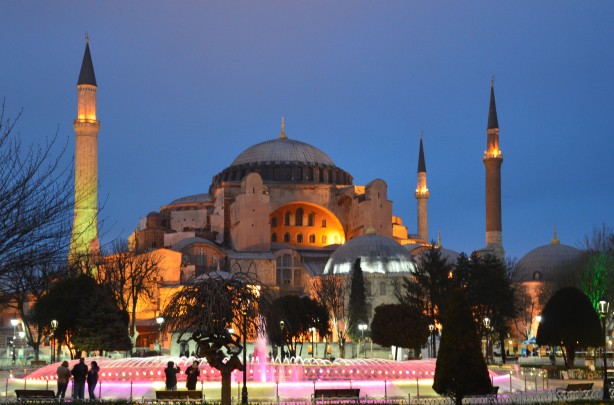
The building was originally a .
The building was originally a .
Tap to reveal answer
The Hagia Sophia was originally built as an early Greek Orthodox church. It is difficult to consider the architecture as of a particular time period or style as it has been changed and influenced so many times. There are, however clear remnants of Greek Classical style as well as the early hints of what will become the Romanesque church style.
Image adapted from http://www.publicdomainpictures.net/hledej.php?hleda=hagia+sophia+5.
The Hagia Sophia was originally built as an early Greek Orthodox church. It is difficult to consider the architecture as of a particular time period or style as it has been changed and influenced so many times. There are, however clear remnants of Greek Classical style as well as the early hints of what will become the Romanesque church style.
Image adapted from http://www.publicdomainpictures.net/hledej.php?hleda=hagia+sophia+5.
← Didn't Know|Knew It →
This building does NOT have a(n) .
This building does NOT have a(n) .
Tap to reveal answer
The church is a combination of central and Basilica plan. It has all of the standard additions of those styles, including the nave and apse, as almost every church of this type does. The narthex is identified as the porch-like addition opposite the apse. This church does not have an atrium, however, which would look like a long open plan that sits before the church door.
Image adapted from http://www.publicdomainpictures.net/hledej.php?hleda=hagia+sophia+5.
The church is a combination of central and Basilica plan. It has all of the standard additions of those styles, including the nave and apse, as almost every church of this type does. The narthex is identified as the porch-like addition opposite the apse. This church does not have an atrium, however, which would look like a long open plan that sits before the church door.
Image adapted from http://www.publicdomainpictures.net/hledej.php?hleda=hagia+sophia+5.
← Didn't Know|Knew It →
The plan of this building is .
The plan of this building is .
Tap to reveal answer
The Hagia Sophia has all the standard additions of the Basilica-plan church, including the apse opposite the door, a nave in the center, and aisles on each side. It lacks the cross-like arms of later Basilica churches. It also has a domed top and a square-ish base, which are both central-plan additions. It is unique in this way among its contemporaries.
Image adapted from http://www.publicdomainpictures.net/hledej.php?hleda=hagia+sophia+5.
The Hagia Sophia has all the standard additions of the Basilica-plan church, including the apse opposite the door, a nave in the center, and aisles on each side. It lacks the cross-like arms of later Basilica churches. It also has a domed top and a square-ish base, which are both central-plan additions. It is unique in this way among its contemporaries.
Image adapted from http://www.publicdomainpictures.net/hledej.php?hleda=hagia+sophia+5.
← Didn't Know|Knew It →
Construction of the building in its current form began in .
Construction of the building in its current form began in .
Tap to reveal answer
The current layout of the Hagia Sophia was begun by Justinian II in 532. It was ordered after his predecessors tried and failed to build a monumental building in that area. As Justinian was largely regarded as the first Byzantine emperor, the Hagia Sophia became a seminal work for Byzantine and later Eastern Orthodoxy churches.
Image adapted from http://www.publicdomainpictures.net/hledej.php?hleda=hagia+sophia+5.
The current layout of the Hagia Sophia was begun by Justinian II in 532. It was ordered after his predecessors tried and failed to build a monumental building in that area. As Justinian was largely regarded as the first Byzantine emperor, the Hagia Sophia became a seminal work for Byzantine and later Eastern Orthodoxy churches.
Image adapted from http://www.publicdomainpictures.net/hledej.php?hleda=hagia+sophia+5.
← Didn't Know|Knew It →
The architect of the building was .
The architect of the building was .
Tap to reveal answer
Isidore of Miletus, along with his companion the mathematician Anthemius of Tralles, was commissioned by Justinian I to create the Hagia Sophia. Anthemius died shortly before construction could begin, so Isidore continued alone. He was considered the father of the current structure, minus the Islamic artistic additions.
Image adapted from http://www.publicdomainpictures.net/hledej.php?hleda=hagia+sophia+5.
Isidore of Miletus, along with his companion the mathematician Anthemius of Tralles, was commissioned by Justinian I to create the Hagia Sophia. Anthemius died shortly before construction could begin, so Isidore continued alone. He was considered the father of the current structure, minus the Islamic artistic additions.
Image adapted from http://www.publicdomainpictures.net/hledej.php?hleda=hagia+sophia+5.
← Didn't Know|Knew It →
The tall, thin towers are called .
The tall, thin towers are called .
Tap to reveal answer
The towers are called minarets. They are an Islamic addition to the church, added when it became a mosque in the fifteenth century after the Turks sacked Constantinople. These towers are not universal, but are common in Islamic mosque architecture.
Image adapted from http://www.publicdomainpictures.net/hledej.php?hleda=hagia+sophia+5.
The towers are called minarets. They are an Islamic addition to the church, added when it became a mosque in the fifteenth century after the Turks sacked Constantinople. These towers are not universal, but are common in Islamic mosque architecture.
Image adapted from http://www.publicdomainpictures.net/hledej.php?hleda=hagia+sophia+5.
← Didn't Know|Knew It →
The interior of the building is likely decorated with .
The interior of the building is likely decorated with .
Tap to reveal answer
The Hagia Sophia was built just after the birth of the Roman Christian tradition, and came well before the advent of Renaissance oil paintings in churches. It was also built in the Middle East, and was influenced by the artistic traditions of the area. It therefore likely has mosaics on the inside, which are the cornerstone of Byzantine church art.
Image adapted from http://www.publicdomainpictures.net/hledej.php?hleda=hagia+sophia+5.
The Hagia Sophia was built just after the birth of the Roman Christian tradition, and came well before the advent of Renaissance oil paintings in churches. It was also built in the Middle East, and was influenced by the artistic traditions of the area. It therefore likely has mosaics on the inside, which are the cornerstone of Byzantine church art.
Image adapted from http://www.publicdomainpictures.net/hledej.php?hleda=hagia+sophia+5.
← Didn't Know|Knew It →